The journey of India's constitution is like reading a fascinating story that reflects our nation's determination for freedom. The Constitution of India has a captivating timeline, filled with important events and leaders who played key roles in shaping our vibrant democracy. From the early days of independence to the creation of our historic constitution, this journey showcases the remarkable path that led to the birth of the world's longest constitution.
Timeline of Indian Constitution
This is how Indian Constitution came into existence. You can note down the important dates for your upcoming GS exams:
-
Jan 26
New Constitution in Force
Entry into force of the new constitution, marking the culmination of a journey that took 2 years, 11 months, and 18 days, with a total expenditure of ₹6.4 million.
-
Jan 24
Constitution of India
The last meeting of the Constituent Assembly, where 'The Constitution of India' is signed and accepted by all.
-
Nov 26
Constituent Assembly adopts the final draft
The Constituent Assembly adopts the final draft, making it official.
-
Jul 16
V. T. Krishnamachari was elected as the second Vice-President
V. T. Krishnamachari was elected as the second Vice-President of the Constituent Assembly along with Harendra Coomar Mookerjee
-
Dec 06
Constituent Assembly formally convenes for the first time
The Constituent Assembly formally convenes for the first time, initiating the process of writing a constitution
-
Draft was finalized and submitted
The draft was finalized and submitted. From 1948 to 1949, the Constituent Assembly met in sessions open to the public.
Nov 04
-
Aug 29
Drafting Committee is established
The Drafting Committee was established, under the chairmanship of Dr. B.R. Ambedkar, with six other members. 6 members of the committee were: K.M.Munshi, Muhammed Saadulah, Alladi Krishnaswamy Iyer, Gopala Swami Ayyangar, N. Madhava Rao (He replaced B.L. Mitter who resigned due to ill health), T. T. Krishnamachari (He replaced D.P. Khaitan who died in 1948).
-
Aug 15
India achieved independence
India achieves independence, splitting into the Dominion of India and the Dominion of Pakistan.
-
Aug 14
Proposal for creation of committees
Proposals for the creation of committees were tabled
-
National flag is adopted
The national flag is adopted
Jul 22
-
Feb 20
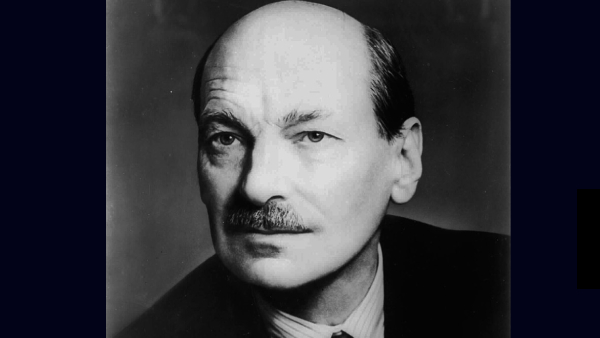
Clement Richard Attlee's foreign policy
Clement Richard Attlee's foreign policy centers around decolonization. On this date, he announces the decision to grant independence earlier than the originally intended date of June 30, 1948.
-
Dec 13
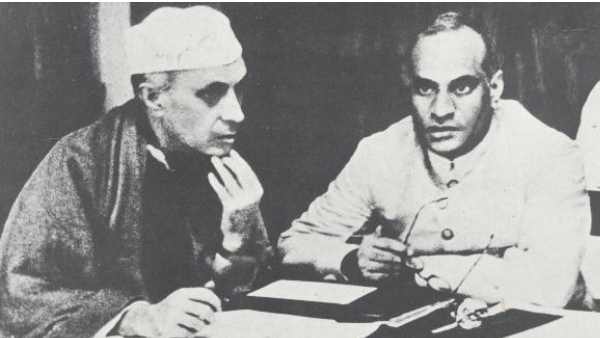
Objective Resolution was presented by Jawaharlal Nehru
Jawaharlal Nehru presents the 'Objective Resolution,' outlining the constitution's underlying principles, later becoming the Preamble
-
Dec 11
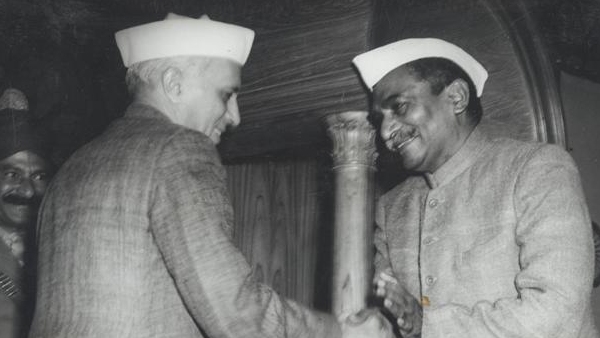
President Appointed – Rajendra Prasad
The President, Rajendra Prasad, is appointed along with Vice-Chairman Harendra Coomar Mookerjee and Constitutional Legal Adviser B. N. Rau. Initially comprising 389 members, the Assembly's total declines to 299 after partition.
-
Dec 09
Constituent Assembly is formed
The Constituent Assembly is formed, with the Muslim League boycotting the meeting due to demands for a separate state.
-
Britain decides to grant independence to India
Britain decides to grant independence to India, leading to the dispatch of the Cabinet Mission to discuss the modalities for the transfer of power. Although the exact date is unknown, this period marks a crucial turning point.
Jul 01
The Indian Constitution is like a helpful guide for democracy, showing how the world's largest democratic journey works. It's not just a set of rules; it's a living promise from a billion people. Focused on fairness, freedom, and equality, the Constitution is the strong base of India's lively democracy. Imagine it as a giant woven picture, where everyone plays a crucial role in building a country that's free, fair, open-minded, and democratic. Being the largest democracy means that everyone, no matter where they're from, has a say in deciding the country's future.
As we mark Republic Day on 26th January, the story of our constitution reflects our love for democracy. It covers the challenges of early independence to the big moment when our constitution was made. This story points out important events and leaders who made the world's longest constitution possible.
Join us in exploring this exciting timeline, especially if you're a student preparing for UPSC or other competitive exams-it's a valuable journey through the milestones of India's constitutional history!
The following is the Timeline of Indian Constitution





 Click it and Unblock the Notifications



 Continue with Google
