Tamil Nadu, one of India's most politically vibrant and socially progressive states, has a rich legacy of leadership shaped by charismatic and visionary Chief Ministers. Since gaining independence in 1947, the state has transitioned from early Congress-led governments to the rise of the powerful Dravidian movement, which redefined its political and cultural identity.
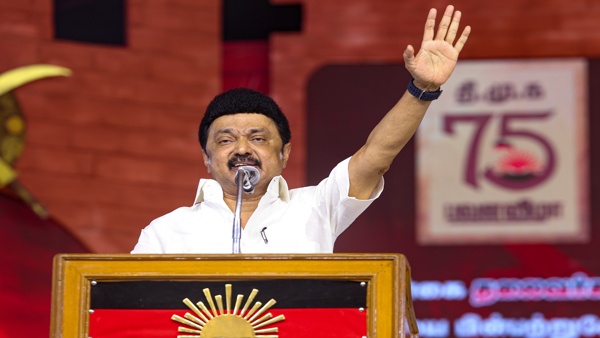
Image from Wikipedia
The Chief Minister, as the elected head of the state government, plays a pivotal role in policy formulation, governance, and representing the voice of the people. Tamil Nadu's political history has been marked by the leadership of stalwarts like K. Kamaraj, C. N. Annadurai, M. Karunanidhi, M. G. Ramachandran, and J. Jayalalithaa-each leaving a distinct imprint on the state's social and economic development.
The Dravidian parties-DMK and AIADMK-have dominated the state's political scene since the late 1960s, bringing forward welfare-oriented governance, linguistic pride, and social justice reforms. From education and industrial growth to women's welfare and digital advancement, the Chief Ministers of Tamil Nadu have consistently strived to uplift the socio-economic status of its citizens.
This article presents a chronological list of Chief Ministers from 1947 till date, highlighting their contributions and linking relevant constitutional articles that define their role. It aims to offer a concise yet informative understanding of Tamil Nadu's political journey and the influential leaders who have steered the state through its many transformations.
Here's a comprehensive overview of the Chief Ministers of Tamil Nadu from 1947 to the present, along with key constitutional articles related to their roles:
Chief Ministers of Tamil Nadu (1947-Present)
Sl.No.
Chief Minister
Term Start
Term End
Party
1.
A. Subbarayalu Reddiar
17 Dec, 1920
11 Jul, 1921
Justice Party
2.
Raja of Panagal
11 Jul, 1921
3 Dec, 1926
Justice Party
3.
P. Subbarayan
4 Dec, 1926
27 Oct, 1930
Independent
4.
B. Munuswamy Naidu
27 Oct, 1930
4 Nov, 1932
Justice Party
5.
P.T. Rajan
4 Nov, 1932
5 Apr, 1936
Justice Party
6.
C. Rajagopalachari
14 Jul, 1937
29 Oct, 1939
Indian National Congress
7.
O. P. Ramaswamy Reddiar
30 Apr, 1946
23 Mar, 1947
Indian National Congress
8.
Kumaraswami Kamaraj
13 Apr, 1954
2 Oct, 1963
Indian National Congress
9.
M. Bhaktavatsalam
2 Oct, 1963
6 May, 1967
Indian National Congress
10.
C. N. Annadurai
6 May, 1967
3 Feb, 1969
Dravida Munnetra Kazhagam
11.
V. R. Nedunchezhiyan (Acting)
3 Feb, 1969
10 Feb, 1969
Dravida Munnetra Kazhagam
12.
M. Karunanidhi
10 Feb, 1969
4 Jan, 1976
Dravida Munnetra Kazhagam
13.
M. G. Ramachandran
30 Jun, 1977
24 Dec, 1987
All India Anna Dravida Munnetra Kazhagam
14.
V. N. Janaki Ramachandran
7 Jan, 1988
30 Jan, 1988
All India Anna Dravida Munnetra Kazhagam
15.
M. Karunanidhi
27 Jan, 1989
30 Jan, 1991
Dravida Munnetra Kazhagam
16.
J. Jayalalithaa
24 Jun, 1991
12 May, 1996
All India Anna Dravida Munnetra Kazhagam
17.
M. Karunanidhi
13 May, 1996
13 May, 2001
Dravida Munnetra Kazhagam
18.
J. Jayalalithaa
14 May, 2001
21 Sep, 2001
All India Anna Dravida Munnetra Kazhagam
19.
O. Panneerselvam
21 Sep, 2001
1 Mar, 2002
All India Anna Dravida Munnetra Kazhagam
20.
J. Jayalalithaa
2 Mar, 2002
12 May, 2006
All India Anna Dravida Munnetra Kazhagam
21.
M. Karunanidhi
13 May, 2006
15 May, 2011
Dravida Munnetra Kazhagam
22.
J. Jayalalithaa
16 May, 2011
27 Sep, 2014
All India Anna Dravida Munnetra Kazhagam
23.
O. Panneerselvam
29 Sep, 2014
23 May, 2015
All India Anna Dravida Munnetra Kazhagam
24.
J. Jayalalithaa
23 May, 2015
5 Dec, 2016
All India Anna Dravida Munnetra Kazhagam
25.
O. Panneerselvam
6 Dec, 2016
16 Feb, 2017
All India Anna Dravida Munnetra Kazhagam
26.
Edappadi K. Palaniswami
16 Feb, 2017
6 May, 2021
All India Anna Dravida Munnetra Kazhagam
27.
M. K. Stalin
7 May, 2021
Incrumbent
Dravida Munnetra Kazhagam
AI Generated Image
Important Constitutional Articles Related to Chief Ministers
Article
Description
Article 163
Establishes a Council of Ministers, headed by the Chief Minister, to aid and advise the Governor in exercising their functions.
Article 164
Details the appointment of the Chief Minister by the Governor and the tenure of ministers, who serve at the Governor's pleasure.
Article 167
Outlines the duties of the Chief Minister, including providing information to the Governor and communicating decisions of the Council of Ministers.
Brief Overview of Tamil Nadu's Chief Ministers
Tamil Nadu's political narrative has been profoundly influenced by leaders who not only governed but also inspired socio-cultural transformations:
C. N. Annadurai: Revered as Anna, he was the first non-Congress Chief Minister of Tamil Nadu and a key architect of the Dravidian movement. His leadership marked the rise of regional pride, the Tamil identity, and the assertion of linguistic rights. He laid the foundation for a new political ideology centered around social equality and self-respect.
M. Karunanidhi: A five-time Chief Minister and a literary giant, Karunanidhi was a master strategist and powerful orator. His tenure was notable for administrative reforms, emphasis on social justice, and promotion of Tamil culture. Under his leadership, the DMK became a formidable force in the state's politics.
M. G. Ramachandran (MGR): A legendary actor turned politician, MGR established the AIADMK and brought a new wave of welfare politics to Tamil Nadu. His rule focused on schemes for the poor, mid-day meals for school children, and upliftment of the underprivileged, earning him immense adoration.
J. Jayalalithaa: Fondly known as Amma, she was one of Tamil Nadu's most powerful and iconic leaders. A six-time Chief Minister, Jayalalithaa championed women's welfare, digital governance, and populist programs like 'Amma Canteens'. Her political journey was marked by resilience and charisma.
M. K. Stalin: The current Chief Minister and son of M. Karunanidhi, Stalin represents the new generation of DMK leadership. His governance emphasizes administrative efficiency, digital transformation, urban development, and inclusive growth while continuing the Dravidian legacy.


 Get UpdatesGet notified on education trends, resources, and growth opportunities!


 Click it and Unblock the Notifications




 Continue with Google
