This is the Reel Life: Career Opportunities in Cinematography
Unique Courses
oi-George Thomas
Cinematography is an important part of film making. There is more to it than just recording a shot. There are many skills that are required and the career options are many in this area.
Our lives have intertwined with cinema for a long time now. The Indian cinema celebrated its hundredth anniversary in the year 2013 and now we are moving forward in the 104th year with movies like Baahubali breaking Box Office records and Dangal receiving rave reviews in neighboring countries like China.
This is the Reel Life: Career Opportunities in Cinematography
Life on reel, came about in the early 1800s when inventors were trying to capture motion. The first motion picture that was photographed was by Eadweard Muybridge of a horse galloping.
As years formed to decades, cinema emerged as a reflection of life, offering humans an escape from reality. Advancement of technology resulted in the use of more digitally well-equipped forms of recording motion than to film stock which used till the 2010s.
Who is a Cinematographer?
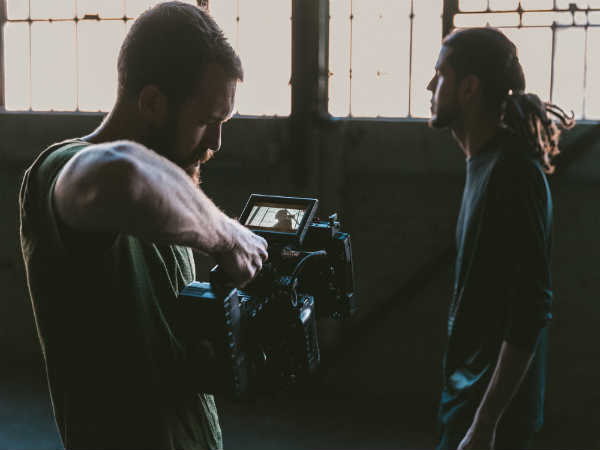
The cinematographer is the key person who is specialized in capturing the shots that are required for the film. They visualize how the scene would be shot and appear on the screen. After discussing the procedures with the directors, they decide on the creative techniques that can be used to shoot the scenes. This becomes a relevant aspect of film making, as the vision of the cinematographer has a direct influence on how the audience will react. The aspects of lighting, angles, themes, tint, tones are specifics that a cinematographer must keep in mind while filming a shot.
Cinematographers collaborate closely with the film director, the production designer, and the other heads of the art department during pre-production to come up with ideas for the look, feel, and visual narrative tactics of the movie.
Directors of photography will ask questions like, "What is the tone of the film?" during this time. What colour scheme is used? What other movies' aesthetics influenced this one? What supplemental effects are required? Using mood boards or lookbooks, directors and cinematographers frequently communicate with one another during this stage.
Cinematographers oversees the camera and lighting crews while paying close attention to cinematography principles including composition, framing, and exposure. Choosing the camera lens and filters, figuring out the best depth of focus for the shot, and deciding with the director which shots should be close-ups, medium shots, or wide shots are all part of this process. The director of photography will also offer the camera operator instructions on what kind of camera movement and work is required in a particular shot.
Skills required to become a Cinematographer
Academy Award winner Conrad Hall said, "Cinematography is infinite in its possibilities... much more so than music or language."
A creative vision is a must for such a field. As Hall says, there are so many potentials in the area, therefore it requires one to sieve through as many ideas as possible and decide on a final one.
Such an area of work involves a nexus of requirements with an addition to an artistic focus.
Technical knowledge, in the field of study of optics, processing of the film, electronics of the equipment that is used
Knowledge of the use of digital tools and computers is required.
It is the culmination of art and science which gives a pathway for individuals who are best at both.
How to become a Cinematographer?
The essential skills that one requires is an appeal for visual art and the ability to understand the nuances of film making. An aspiring cinematographer may take any stream for their Higher Secondary education, but a background knowledge about physics and knowledge about optics is always a plus point.
A two or three-year diploma or degree in Cinematography is sufficient to kick start your career in terms of academics. Being an area where one needs to learn from experience more than theory, an aspiring cinematographer must start their journey by assisting an established cinematographer.
Usually, after this period of learning from hands-on experience, people tend to start their career as independent cinematographers. Once this starts, the skills that one has developed over the time will determine the success of their career.
In movies, a cinematographer will have many opportunities to start with. Initially, they will be assisting the senior cinematographer, whether it is in the field of commercial movies, Television shows or documentaries. As one assist, one will find many opportunities.
Firstly, the role of the Camera Production Assistant, who is the trainee who works with the film unit as an assistant to the cinematographer, while learning the craft.
Motion Control Operator is the person who works on the motion control rig, which basically is a 'camera robot' and has the ability to systematically repeat camera moves for special effects uses. Motion control rigs are typically rented with a knowledgeable operator.
Camera Operator, who operates the camera as per the direction of the Cinematographer. At times, the cinematographer himself takes up this job if there aren't enough staff.
The First Camera Assistant, also known as 1AC, is responsible for keeping the camera on the focus of the subject. They are also in-charge of putting the equipment of the camera together and dismantle them after the job is finished.
The Second Camera Assistant, also known as 2 AC is responsible for loading the clapper board at the start of each take and loads the film stock onto the camera. They supervise the equipment and the transport of the same.
Salary and Scope of a Cinematographer
The initial pay of a cinematographer will be relatively low, considering she has just started her career. Based on her experience and her work, her salary will be increased as new projects will come in her way.
In India, initially, the pay would be on an average, Rs. 84,00- Rs 96,000 a year, which with experience will go up to Rs. 4,80,000 - Rs. 6,00,000. This is on an average basis. Accomplished individuals with a demand in the market would be given higher pay.
The Bureau of Labor Statistics says that the need for cinematographers will only increase in the coming future with the expanding entertainment industry and the globalized network that is forming.
The art of Cinematography is not just limited to making of fictional movies. Science and technology is a wide area where the use of cinematography plays a pivotal role. Moreover documentaries and non-fictional series are becoming famous off late and there is huge scope in that area.
This is the Reel Life
A few hurdles that you must cross
Just like any other job, a cinematographer will have to face innumerable hurdles before they reach a position that can be termed as successful.
The bigger problem in this area of work is that networking matters the most.
Your ability to present yourself and be around people will help you move past many barricades in your career.
Unlike other desk jobs, one has to actively take interest in staying up for long hours to get that perfect shot.
Because of many other people, their time and effort are at stake, one has to make sure that there are no mistakes and no wastage of resources or time.
Top Institutes in India providing a course in Cinematography
Film & Television Institute of India (Pune)
Satyajit Ray Film & Television Institute (SRFTI) (Kolkata)


 Get UpdatesGet notified on education trends, resources, and growth opportunities!


 Click it and Unblock the Notifications




 Continue with Google
