




 Click it and Unblock the Notifications

-

Shivaji University
Accreditation & Recognition
Established
Affiliation
About Shivaji University
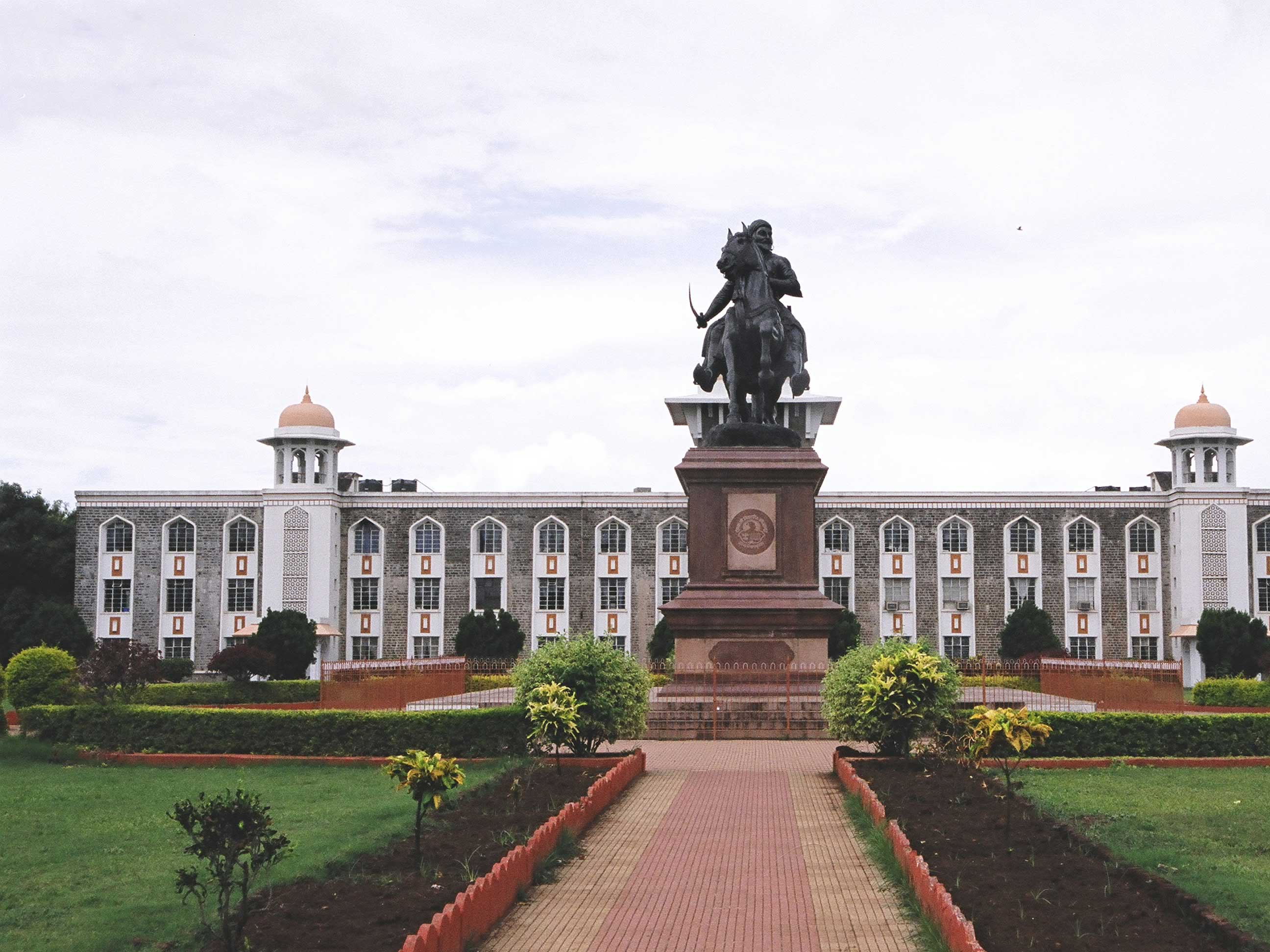
Shivaji University, established in 1962, is named after the Great Maratha Warrior and founder of the Maratha empire Chhatrapati Shivaji. It was inaugurated on 18th November, 1962 by Dr. Radhakrishnan, the then President of India. One of the major objectives behind foundation of this University was to cater to the regional needs of South Maharashtra. The jurisdiction of the University is spread over three districts viz. Kolhapur, Sangli and Satara with strength of about 3,00,000 students studying in 280 affiliated colleges and recognised institutes. This region of Maharashtra boasts of rich and varied socio-cultural heritage. Under the innovative and socially reformist leadership of Chhatrapati Shahu Maharaj, the princely ruler of Kolhapur, the city had become at the beginning of this century, a focal point of educational opportunities for all classes and communities of South-Western Maharashtra, and northern parts of neighbouring Karnataka. This is also land of Karmaveer Bhaurao Patil, who struggled for taking education to the masses by his innovative 'Earn and Learn' scheme. When the University was founded by the Shivaji University Act of 1962, the objectives set before the University included making opportunities of higher education accessible to rural youth, conducting fundamental and applied research in the field of science and humanities to ensure regional growth and development.
In 1962 the University started functioning with 34 affiliated colleges and about 14000 students with 5 Post-graduate Departments on the campus. Today the number of affiliated colleges has gone upto 280 and students strength upto 3,00,000 with 34 Postgraduate Departments on campus. The University imparts education in 10 major faculties of Arts, Social Science, Science, Commerce, Education, Fine Arts, Law, Medicine, Ayurvedic Medicine, Engineering and Technology.
During initial two decades the efforts were concentrated on expansion of higher education and foundation of new colleges in different parts in the three districts under its jurisdiction. The University consolidated its base in this phase by 'taking education to the people'. The decade of 1980s saw a major expansion, especially the growth of professional faculties like Engineering, Education, Management and Medicine. The recent phase of the University can be termed as "a pursuit of academic excellence". Since last 4-5 years, several attempts are being made to overcome the image of University as a regional University. Several steps have been taken to raise the standards of teaching and research so as to measure upto global standards. This is being achieved by exploring new areas of higher learning and research in rapidly emerging fields like Industrial Chemistry, Space Science, Environmental Science, Bio-Chemistry, Sericulture, Polymer Chemistry and Computer Science, in addition to basic science disciplines. The University Department of Physics has been recently identified by UGC for its Special Assistance Programme and recognised as Department of Research Support. New research areas in these departments are Super conductors Energy, Bio-diversity and Bio-technology. The University has also established the University-Industry Interaction Cells in three districts.
The faculties of Arts and Social Sciences are also gearing up to meet the demands of changing time. Establishment of Centre for Women's Studies and extension activities through Adult and Continuing Education and Shramik Vidyapeeth are indicators of this change. Department of Economics has been selected by UGC for its Special Assistance Programme. Departments of Sociology, Education, Geography, Physics and Economics are offering special courses in emerging areas like Environmental Science is also functioning actively. The University is encouraging merit by introducing an unique scheme called 'Shivaji University Merit Scholarship' offering 500 scholarships to meritorious students in affiliated colleges.
It has also instituted research fellowships for Ph. D. students in the Post-Graduate Departments of the University. The University has made a budget provision of about Rs. 45 Lakhs for these scholarships out of its own funds. This University can proudly claim to be the first University in India to initiate such a scheme.
Shivaji University has been re-accredited by National Assessment and Accreditation Council (NAAC) Bangalore, with B grade.
VISION
Shivaji University is committed to meet the Educational, Social, Cultural & Economic needs of the region and the nation to create a just and Humane Society.
MISSION
We are dedicated to promote and foster a culture of high quality teaching and learning and to serve societal needs by encouraging, generating and promotion excellence in research and extension activities.
The center facilitates with various facilities like LCD projectors, Internet, Computers, Printers, Laptop, Handy Camera, OHP and other facilities which are available to students, teachers & researchers to use.
SU has a central library that has more than 746 books on Mahatma Gandhi, 121 books that are included in department library and Journals & Reports are also available in the library.
| Streams | Mode | Duration | Eligibilty |
|---|---|---|---|
| Master of Science | Full Time | 2 Years | |
| Master of Science in Electronic Sciences | Full Time | 3 Years | |
| Master Of Science in Environmental Science | Full Time | 2 Years | |
| Master of Science in Fisheries | Full Time | 3 Years | |
| Master of Science in Food Science & Technology | Full Time | 3 Years | |
| Master of Science in Geography | Full Time | 2 Years | |
| Master of Science in Geology | Full Time | 3 Years | |
| Master of Science in Industrial Chemistry | Full Time | 2 Years | B.Sc. |
| Master of Science in Inorganic Chemistry | Full Time | 2 Years | B.Sc |
| Master of Science in Meteorology | Full Time | 3 Years | |
| Master of Science in Pest Management | Full Time | 3 Years |
| Streams | Mode | Duration | Eligibilty |
|---|---|---|---|
| Master of Commerce | Full Time | 2 Years |
| Streams | Mode | Duration | Eligibilty |
|---|---|---|---|
| Master of Arts | Full Time | 2 Years | |
| Master of Arts in English | Full Time | 2 Years | B.A |
| Master of Arts in Fine Arts | Full Time | 2 Years | |
| Master of Arts in Foreign Language | Full Time | 2 Years | |
| Master of Arts in Geograhy | Full Time | 2 Years | 10+2 |
| Master of Arts in Hindi | Full Time | 2 Years | B.A |
| Master of Arts in Marathi | Full Time | 2 Years | B.A |
| Streams | Mode | Duration | Eligibilty |
|---|---|---|---|
| Bachelor of Engineering in Computer Science & Engineering | Full Time | 4 Years | 10+2 & Qualifying Entrance Exam |
| Bachelor of Engineering in Instrumentation | Full Time | 4 Years | 10+2 |
| Bachelor of Engineering In Mehanical | Full Time | 4 Years | 10+2 |
| Bachelor of Engineering in Production | Full Time | 4 Years | +2 |
| Bachelor of Technology in Chemical Engineering | Full Time | 4 Years | 10+2 |
| Master of Civil Engineering | fulltime | 2 years | na |
| Master Of Engineering In Automobile | Full Time | 2 Years | na |
| Master of Engineering in Electrical Engineering | Full Time | 2 Years | B.E / B.Tech |
| Master of Engineering in Electronic | Full Time | 2 Years | BE |
| Master of Engineering in Information Technology | Full Time | 2 Years | |
| Master of Technology in Textiles | fulltime | 2 years | B.Tech |
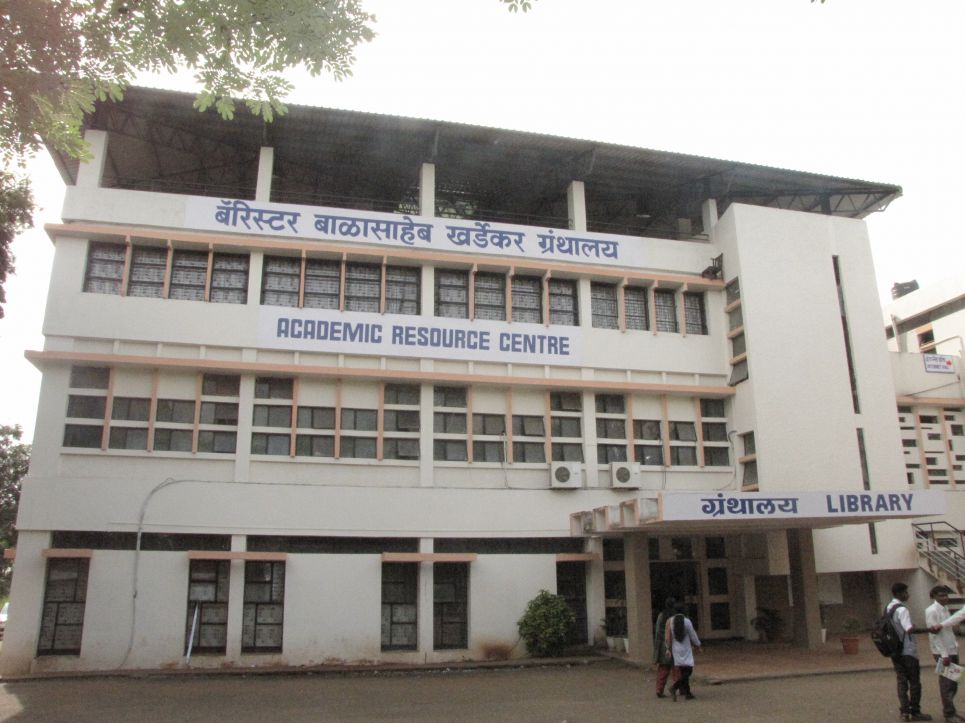
- Library
- Sports
- Hostel
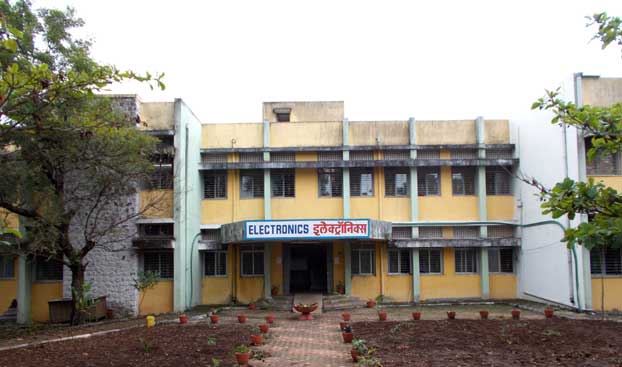
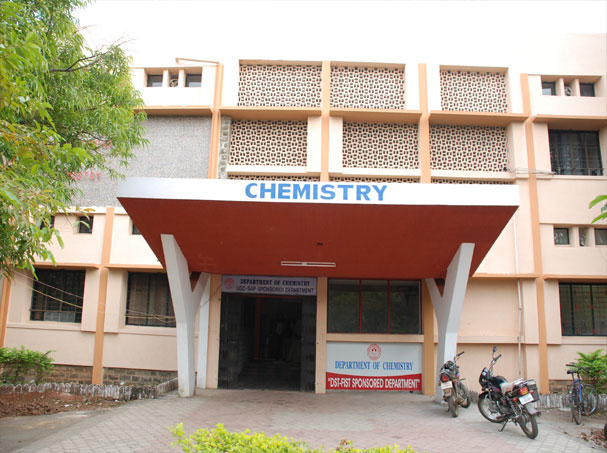
- Laboratories
- Internet
- Auditorium
- Classroom
- Health Centre / Hospital
- Cafeteria/Canteen
- Anti Ragging
- Public Transportation