




 Click it and Unblock the Notifications

-
National Dairy Research Institute (NDRI)
Type of College
Accreditation & Recognition
Established
About National Dairy Research Institute (NDRI)
National Dairy Research Institute (NDRI), Karnal was established in 1923.
The National Dairy Research Institute as the premier Dairy Research Institution undertakes research, teaching and extension activities towards dairy development in the country.
Being the National Institute, it conducts basic and applied research with the objective to enhance animal productivity and also to develop cost effective technologies for the benefit of the teeming millions.
Further, the Institute provides high quality manpower to meet the human resource requirements for the overall dairy development in the country. Campus of National Dairy Research Institute. The institute is situated at Karnal, which is 133 km from Delhi and institue is 1 km from railway station or bus stand. The sprawling 560 ha campus of the Institute is self sufficient in all the modern facilities. Facilities at National Dairy Research Institute.
ICAR-National Dairy Research Institute (NDRI) at Karnal, Haryana is one of the premier Institutes in dairy sector, which has contributed a lot in the growth of dairy industry and played a crucial role in India’s development in milk production with its continuous research. Over ninety six year old NDRI’s lineage goes back to the Imperial Institute for Animal Husbandry & Dairying which was set up in Bangalore in 1923 as a center for dairy education. In its erstwhile form of Imperial Institute in Bangalore, Father of the Nation’ Mahatma Gandhi and ‘Bharat Ratna’ Pandit Madan Mohan Malviya, were imparted training at the Institute in 1927. They wanted to get acquainted with modern methods of cattle management and spent two weeks discussing and learning technicalities and complexities of problems pertaining to cows and buffalos in India. Gandhiji was highly appreciative of the most productive crossbred cow ‘Jill’ of the institute. He held several discussions on the problems of Pinjrapoles, which housed low producing, mostly sterile cows and other dairy stock mainly on humanitarian grounds.
Mahatma Gandhi evinced great interest in the work of the Institute and wrote several articles in `Young India’ and `Harijan’ on the importance of dairying and scientific cattle management.
Gandhiji’s thinking and views had significant influence on the political leadership particularly towards taking key policy decisions during early post Independence era, resulting in the formulation of Key Village Scheme, Gosamvardhana Council and intensive Cattle Development Programmes. In 1936 it was renamed as Imperial Dairy Institute and it was shifted to its present site in Karnal in 1955 and renamed again as National Dairy Research Institute. The infrastructure of Imperial institute was retained as southern regional station of NDRI and later in 1964 Eastern regional station was set up at Kalyani in West Bengal. In 1970, NDRI was brought under Indian Council of Agricultural Research. The Institute has the distinction of being a Deemed University for implementing its academic programmes since 1989. The Institute provides high quality education in the field of dairying, which has no parallel in Asia. It is noteworthy that NDRI is not only an important contributor of manpower in dairying required in State Agricultural Universities (SAUs) but also plays an important role in enhancing the teaching capabilities of the faculty from SAUs.
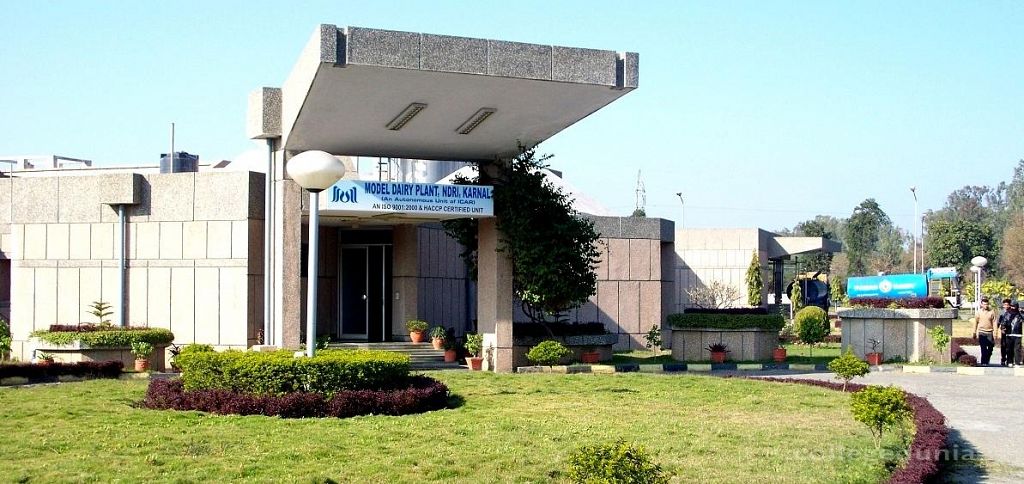
The sprawling 560 ha campus of the Institute is self sufficient in housing laboratories, offices, hostels, hospital, residential complexes, auditorium etc. Various laboratories of the Institute are equipped with the state-of-the-art analytical instruments for carrying out research in most advanced areas of Molecular Biology, Cell Culture, Fermentation Technology, Protein Chemistry, Nutritional Studies, Food Technology, Microbiology, Micro Element Analysis, etc.
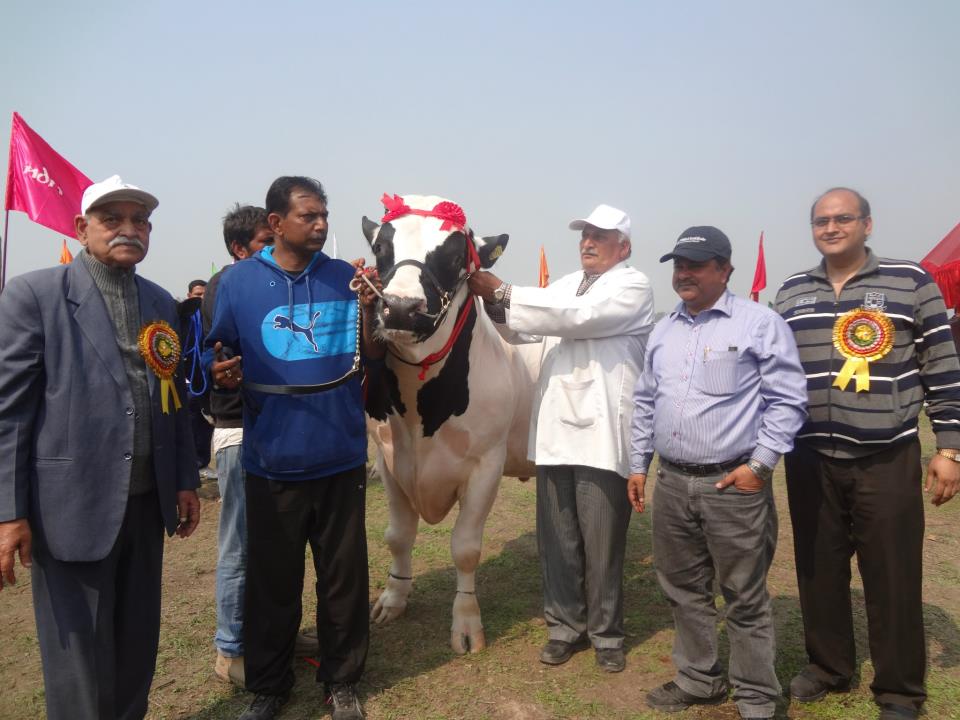
The Institute possesses an elite herd of over 1600 dairy animals including cattle, buffaloes and goats which caters to breed improvement projects and other research activities. The highest peak yields of 44 and 46.5 kg have been recorded in Karan-Swiss and Karan-Fries cows, respectively.
Through consistent selection, the indigenous cattle breeds, Sahiwal and Tharparkar, have been improved and the highest peak yields of 23 and 19.5 kg milk per day have been obtained in these two breeds, respectively. In Murrah buffaloes, the breed that is known to be the best in the world, the peak milk yield of 22.5 kg in a day has been achieved.
A modernMilking Parlor System and Shelter Management System set up recently at the Livestock Farm serve as demonstration models for the progressive farmers and provide infrastructure for conducting research on various aspects of milk production system, reproduction behaviour, growth profile and nutritional requirements for elite milch breeds.
| Streams | Mode | Duration | Eligibilty |
|---|---|---|---|
| Bachelor of Technology in Dairy Science and Technology | Full Time | 4 Years | 10+2 |

- Library
- Sports
- Hostel
- Laboratories
- Auditorium
- Classroom
- Placement
- Computer Lab