




 Click it and Unblock the Notifications

-
Mahatma Phule Krishi Vidyapeeth
Type of College
Established
Affiliation
About Mahatma Phule Krishi Vidyapeeth
Maharashtra Krishi Vidyapeeth (MPKV), Rahuri was established in 1968 and subsequently named as Mahatma Phule Krishi Vidyapeeth after a great social reformer "Mahatma Jyotiba Phule". The basic mandate assigned to this university is advancement in teaching, research and imparting extension education to the farmers of the state.
Before the period of independence and during few years after independence, the non-agricultural universities were entrusted with the responsibility of agricultural education and the State Department of Agriculture contributed to research and extension. The agricultural universities were established in this country from 1960 according to the recommendations of Radhakrishnan Commission (1948).
In pursuance of the Maharashtra Agricultural University (Krishi Vidyapeeth) Act 1967, initially, the Maharashtra Agricultural University (Krishi Vidyapeeth) was established for the entire Maharashtra State and started functioning from 29 March, 1968 with its office at Mumbai. The office was shifted to College of Agriculture, Pune in the year 1969. Subsequently in the same year, two agricultural universities and in 1972, two more agricultural universities were established. Mahatma Phule Krishi Vidyapeeth (MPKV), Rahuri is one of them which was established in 1969 for the Western Maharashtra with its jurisdiction spread over ten districts namely, Satara, Sangli, Kolhapur, Ahmednagar, Solapur, Pune, Nashik, Dhule, Jalgaon and Nandurbar. The University is named after the great social reformer Mahatma Jyotiba Phule. The Mahatma Phule Krishi Vidyapeeth, Rahuri is the premier Agricultural University in Maharashtra that renders services to the farmers through Education, Research and Extension Education.
The Governor of Maharashtra state is the Chancellor of the University, The Minister of Agriculture, Maharashtra state is the Pro-Chancellor, while, Vice-Chancellor is the Head of the University. The Executive Council is the highest policy making body of the University. The Vice-Chancellor is the Chairman of this Council. The Council constitutes of nominated peoples representatives, eminent members from agriculture and development departments, scientists, representative of ICAR and progressive farmers.
The University is assisted by Academic Council, Agricultural Research Council, Extension Education Council for co-ordination and review of academic, research and extension education programmes, seed production and agricultural development programmes.
MPKV has been bestowed with the " Sardar Patel Outstanding Institute Award – 2002 " by the ICAR, New Delhi for excellence in the field of Education, Research and Extension Education. Further the University has been recognized as the “Institute of Excellence” and have been provided with special funds of Rs. 100 cores by the Government of India in its Union budget of 2007-08.
The under-graduate and post-graduate programmes are offered in both faculties. The University has a very good network of research stations spread over different agro-climatic zones. In all 23 research stations, 4 State level specialists and 16 research testing/verification centers are located in different agro-climatic zones in addition to 4 Zonal research stations.
MISSION
The MPKV is committed to the mission of “Continuous improvement in agriculture and allied fields by development of quality human resource, carrying out the basic and applied research for providing appropriate technological solutions; and piloting the extension activities for efficient technology transfer to the farming community and agro-business entrepreneurs”
MANDATE
To provide diploma, graduate, post-graduate and doctorate level quality education in Agriculture, Horticulture, Agricultural Engineering and Allied fields viz., Agril.
Biotechonology, Food Technology, Agriculture Business Management for producing the competent human resource.
To encourage and provide agricultural education to girls particularly with rural background so as to increase their involvement in farming and allied agro-business activities and for empowerment of rural women.
To carry out basic, applied and need-based research in various fields related to agriculture, to provide an appropriate and economical solution for emerging problems; and to develop technologies to improve socio-economic conditions of the farming community.
To arrange the trainings for effective transfer of various technologies to the farmers and the related organizations in order to improve agricultural productivity, production and overall economic conditions of the rural population of the State.
To develop suitable technologies for supporting the growth of subsidiary occupation and agro-based industry and to generate self-employment opportunities for the educated youths and women.
To provide technical advice to the State Government in planning the various schemes for overall socio-economic progress of the rural population of the State.
To establish new colleges, schools, research stations, departments and laboratories to strengthen the agricultural education and research in new emerging areas.
To implement the skill development programmes in the field of agriculture and allied sciences and engineering.
| Streams | Mode | Duration | Eligibilty |
|---|---|---|---|
| Doctor of Philosophy in Agriculture | Full Time | 2 Years | na |
| Streams | Mode | Duration | Eligibilty |
|---|---|---|---|
| Bachelor of Technology in Agricultural Engineering | Full Time | 4 Years | |
| Master of Technology in Agricultural Engineering | Full Time | 2 Years |
| Streams | Mode | Duration | Eligibilty |
|---|---|---|---|
| Bachelor of Science in Agriculture | Full Time | 4 Years | |
| Bachelor of Science in Horticulture | Full Time | 4 Years | |
| Master of Science in Agriculture | Full Time | 2 Years |

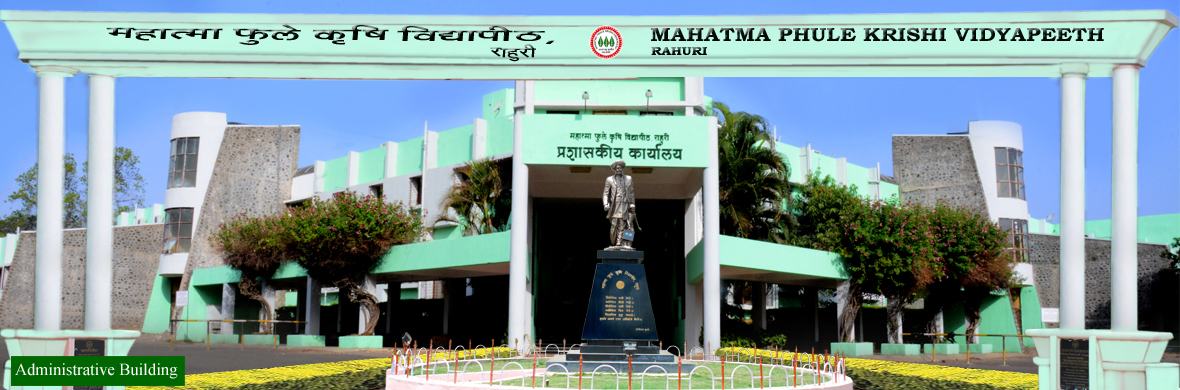
- Library
- Sports
- Hostel
- Laboratories
- Internet
- Classroom
- Placement
- Wi-Fi
- Reading Rooms
- Medical Facility
- Computer Lab
- Cafeteria/Canteen