




 Click it and Unblock the Notifications

-

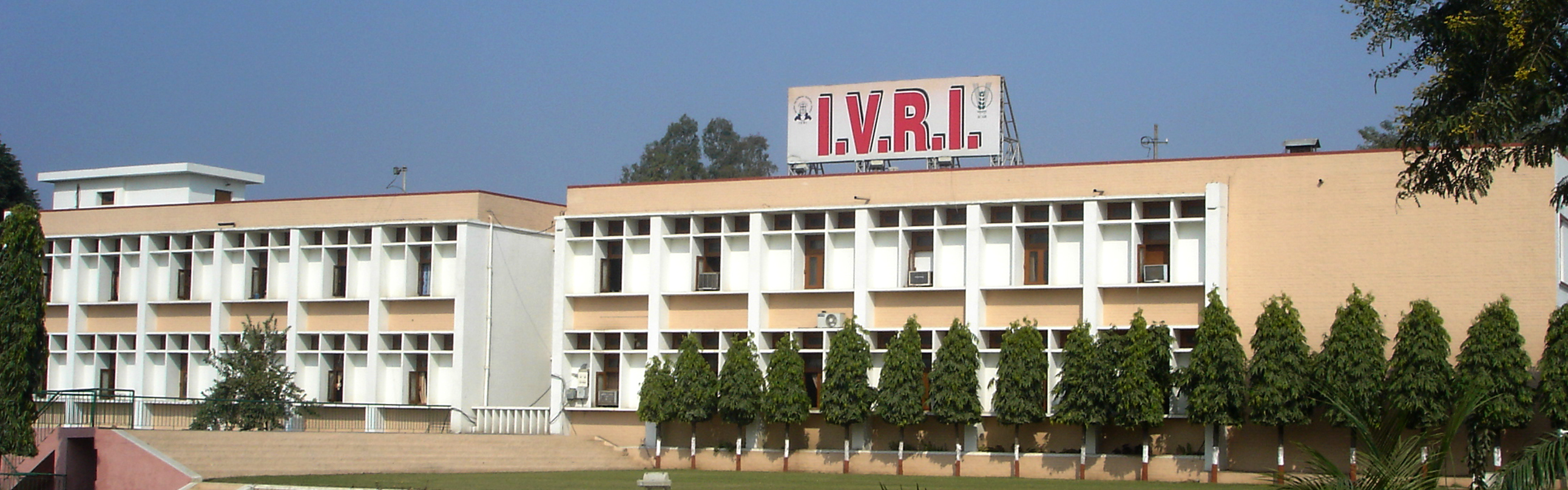
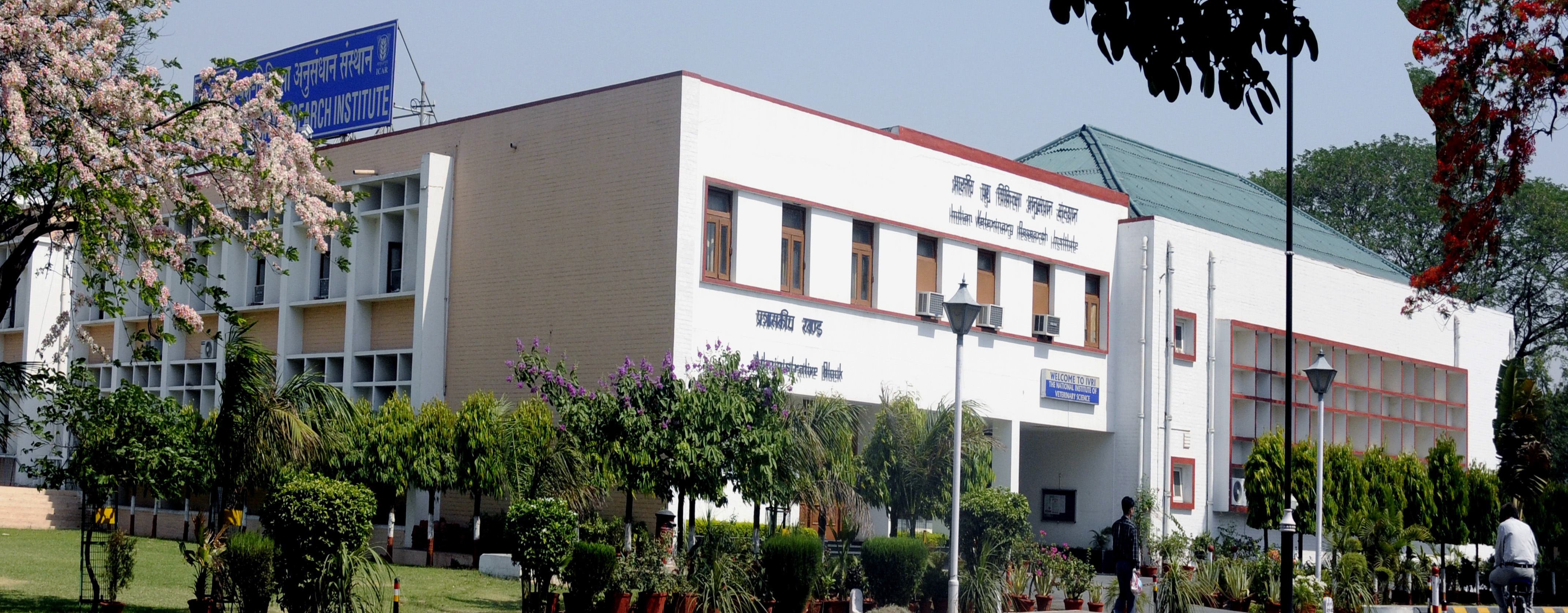
Indian Veterinary Research Institute (IVRI), Izatnagar
Type of College
Established
About Indian Veterinary Research Institute (IVRI), Izatnagar
Indian Veterinary Research Institute (IVRI), Izatnagar was established in 1889. It is one of the premier research institution dedicated to liverstock research and development of the region. The institute with faculty strength of more than 275 has a major mandate of research, teaching, consultancy and technology transfer activities. The Institute with its long scientific heritage has alwaus enjoyed a certain prestige, a tradition all of its own. The Institute imparts quality post-graduate education to students not only from various parts of the country, but also from overseas. Today, the institute with its deemed to be university status contributes immensely to human resource development in the discipline of veterinary sciences with skills and knowledge necessary for the challenges of the new millennium. The Institute continues to play an important role in quality control and potency testing of immunobiologicals to various stakeholdres with a good liaision with industry. In the liberalized scenario, to my mind this represents with inherent and fundamental strength of IVRI. Kisan Mela and Pashu Vigyan Pradarshini and other extension activities including KVK, ATIC, Helpline, etc. play a key role in technology transfer mission of the institute facilties to Indian Veterinary Research Institute.
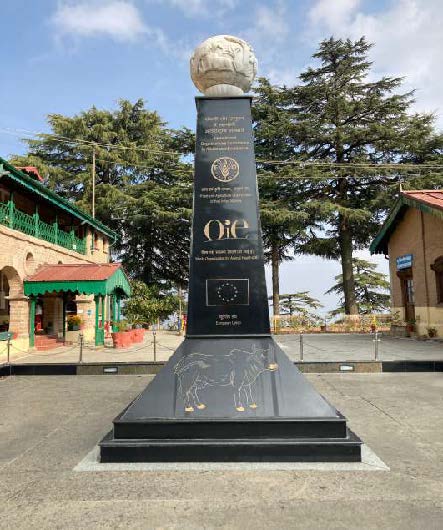
The Imperial Bacteriological Laboratory (IBL) established at Pune in 1889, was first led by Dr Alfred Lingard, as In-charge of the laboratory in 1890. Two years later, it was felt that handling highly infectious micro-organisms and pathological materials in a densely populated city like Pune is hazardous. Consequently, the laboratory was shifted in 1893 to an isolated site amidst the dense conifer forest of Mukteswar in the Kumaon hills of United Province located at about 1500 m above the mean sea level. Cattle plague or rinderpest was the most devastating disease in those days and the institute gave top priority for controlling this deadly disease. In fact, the first batch of anti-rinderpest serum was produced in 1899.
By 1906, the institute started production of antisera against anthrax, haemorrhagic septicaemia and tetanus, a vaccine against black quarter and a diagnostic against equine glanders. To produce more of these biological products, a sub-centre was established at Kargaina, in the outskirts of Bareilly city. But limitation of space at this site led to acquisition of 306 ha. of land in Izatnagar in 1913, where the institute stands today. The Imperial Bacteriological Laboratory was renamed several times. It was known as Imperial Institute of Veterinary Research in 1925, Imperial Veterinary Serum Institute in 1930 and Imperial Veterinary Research Institute in 1936. Finally when India gained independence it was renamed as Indian Veterinary Research Institute. It came under administrative control of Indian Council of Agricultural Research in 1966.
Over the years, the institute expanded by establishing Regional Stations at Palampur and Kolkata and Campuses at Bengaluru, and Pune. The scientific strength of the institute also contributed to establishment of some reputed institutes such as the Central Avian Research Institute (CARI) at Izatnagar in 1979 and the High Security Animal Diseases Laboratory at Bhopal in 1998 (known as National Institute of High Security Animal Diseases, since 2014). In 2015, the institute established the Training and Education Center at Pune, Maharashtra.
The institute has contributed immensely for enhancement of livestock production through control of economically important diseases and eradication of some of them, most notably eradication of Rinderpest, CBPP, African horse sickness and Dourine. Important vaccines against economically important diseases include Rinderpest (GTV vaccine), Hemorrhagic Septicaemia, Anthrax, PPR, Sheeppox, Goatpox and Newcastle disease of poultry. The institute has also developed a number of user friendly and advanced diagnostics for livestock and poultry diseases.
With time, the mandate and scope of the institute was expanded and research was conducted to enhance productivity through genetic improvement of indigenous livestock and development of better cost-effective nutritional interventions.
Value addition of livestock products and research to enhance shelf-life of livestock products and innovative technologies to monitor quality of livestock products during storage had helped the livestock produce s and entrepreneurs. With recommendation of the Expert Committee on Standardization of Veterinary Biological Products (1954), the Division of Standardization was established in 1969, to act as the Central Control Laboratory for whole of India. It continues to be a DCGI recognized laboratory for quality testing of all veterinary vaccines and diagnostics being used in the country. The institute continues its focus on animal health products, most importantly to develop new vaccines and diagnostics and improvise the old ones. It also provides diagnostic services to various stakeholders including wildlife organizations, and contributes immensely to monitoring and surveillance of diseases in the country, development of low cost therapeutic agents based on indigenous herbal preparations and advanced stem cell-based therapeutics. The institute has successfully transferred some of these technologies to various commercial manufacturers and entrepreneurs in the country and has disseminated these technologies to end users. The institute has a dedicated unit to promote entrepreneurs and commercialize the technologies. The significant achievements of the institute has been recognized through various awards, most notably the 'Sardar Patel Outstanding ICAR Institution Award', twice, in 2001 and 2009. The ICAR-IVRI has also been actively involved in teaching and training veterinary professionals since the dawn of 20th century. Regular post-graduate and refresher courses were organized since 1922 and the institute started awarding Diploma for the Associateship of IVRI in 1943 and a P.G. College of Animal Sciences was established in 1958. In the beginning, it was affiliated to the Agra University and subsequently to Rohilkhand University. The Deemed University status was conferred by UGC in 1983. The IVRI-Deemed University with its reputation for quality education offers Master's degree in 22 disciplines and Doctoral degree in 19 disciplines.
The under graduate degree programme (BVSc & AH) has also been initiated from 2015 with an intake of 20 students. The university has MoU with several Central and State Agriculture Universities for extending its expertise in higher education in Veterinary and Animal Sciences.
The Referral Veterinary Polyclinic and Teaching Veterinary Clinical Complex (TVCC) provide treatment services to livestock and pet owners and is an excellent platform for teaching purposes. The Wildlife Centre of the institute imparts education and training on wildlife health management and provides consultancy services to various State and Central organizations. The institute has also established the National Animal Science & Veterinary Educational Museum and a Mini Zoo for educational and recreational purposes.
OBJECTIVES
The ultimate objective of the Institute is to improve the nutritional, economic and social wellbeing of the rural poor by the promotion of sustainable livestock production system designed to result in better utilization of natural resources. More specifically, the objectives of the Institute include :
Planning and undertaking applied and basic research on all aspects of livestock health, production and technology.
Functioning and Deemed University for Post-Graduate education and training on basic, supportive and allied disciplines of veterinary and animal sciences.
Dissemination of research information through appropriate technology transfer programmes and management.
Acting as National Referral Centre for veterinary microbial type cultures.
Development and production of quality immunobiological for livestock and poultry.
Developing technologies for improved animal health and production and providing appropriate diagnostic and consultancy services.
Indian Veterinary Research Institute (IVRI) was established on 9th December, 1889 as Imperial Bacteriological Laboratory at Pune (Maharashtra) and was later shifted to Mukteswar in 1893.
The institute with faculty strength of more than 200 has a major mandate of research, teaching, consultancy and technology transfer activities.
Institute conduct research in animal and veterinary science and also imparts quality under graduate and post-graduate education in veterinary science.
| Streams | Mode | Duration | Eligibilty |
|---|---|---|---|
| Master Of Science in Veterinary & Animal Husbandry | Full Time | 2 Years | |
| Master of Science in Veterinary Science | Full Time | 2 Years |
| Streams | Mode | Duration | Eligibilty |
|---|---|---|---|
| Doctor of Philosophy in Veterinary Science | Full Time | 2 Years |
- Library
- Sports
- Hostel
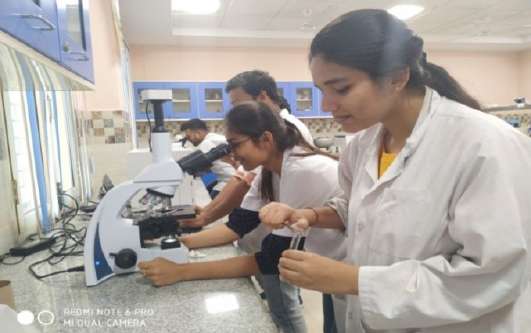
- Laboratories
- Auditorium
- Classroom
- Placement
- Wi-Fi
- Medical Facility
- Computer Lab
- Cafeteria/Canteen