




 Click it and Unblock the Notifications

-
Indian Agricultural Research Institute, Delhi
Type of College
Established
Affiliation
About Indian Agricultural Research Institute, Delhi
ICAR - Indian Agricultural Research Institute (IARI), Delhi was established in the year 1905.
The journey of Indian Agricultural Research Institute (IARI), popularly known as Pusa Institute, began in 1905 at Pusa (Bihar) with the generous grant of 30,000 pounds from an American philanthropist, Mr. Henry Phipps. The institute was then known as Agricultural Research Institute (ARI) which functioned with five departments, namely Agriculture, Cattle Breeding, Chemistry, Economic Botany and Mycology. Bacteriology unit was added in 1907. The name of ARI was changed to Imperial Institute of Agricultural Research in 1911 and, in 1919 it was renamed as Imperial Agricultural Research Institute. Following a devastating earth quake on 15th January 1934, the institute was shifted to Delhi on 29th July 1936. Post independence, the institute has been renamed as Indian Agricultural Research Institute (IARI).
Growth of Regional Stations
In 1939, the concept of Regional Stations emerged to tackle regional problems. The Institute established Regional Stations at Pusa (Bihar), Sirsa and Karnal (Haryana), Shimla and Katrain (Himachal Pradesh), Bhowali (Uttaranchal), Wellington (Tamil Nadu), Indore (Madhya Pradesh), Kalimpong (West Bengal) and Pune (Maharashtra). Initially, the centres at Kanpur and Hyderabad were PIRRCOM stations which were subsequently given the status of Regional Stations. These stations conducted basic and strategic research on a wide range of subjects including horticultural technology, wheat and barley breeding, virus research, seed technology, pulse research, etc. The mandate of Regional Stations is to provide the much needed support in the form of materials, technology or off-season nurseries to scientists all over the country. Two stations located at Aduthurai (Tamil Nadu) and Dharwad (Karnataka) serve as off-season nurseries. The Regional Station at Flowerdale, Shimla of IARI, which was created as a national facility to support wheat breeding programme against rusts, was transferred to the Directorate of Wheat Research at Karnal.
Similarly, the IARI Regional Stations at Kanpur, Sirsa and Bhowali were handed over to Indian Institute of Pulses Research, Central Institute of Cotton Research and Vivekananda Parvatiya Krishi Anusandhanshala, respectively, for research on pulses, cotton and wheat. Growth of Divisions The original five sections established during the British era later developed into Divisions in the year 1945. A more extensive growth of IARI and its Divisions started following the Independence. Now, the research activities are carried out through 19 Divisions. Thus, it is the growth of Divisions which has made IARI one of the largest institutions of its kind not only in India but also in the world. Growth of specialized laboratories Along with the general Divisional Laboratory facilities, the Institute takes pride in having developed sophisticated specialized laboratories in all the fields of agricultural sciences. Realizing the need for interdisciplinary and advanced research, the Institute expanded its infrastructure by creating the following facilities: The Nuclear Research Laboratory, a multi-disciplinary unit was established in 1969, Water Technology Centre was established in 1970 for research and training on integrated management of water, soil and crop, including engineering for water management, National Plant Biotechnology Centre in the country was established in 1985. It is equipped with highly sophisticated equipment for working in the areas of molecular biology, recombinant DNA, cloning and sequencing of genes and genomes, tissue culture, plant transformation and somatic hybridization.
In 1988, the Institute created an Advanced Centre for Plant Virology in the Division of Plant Pathology for generating basic knowledge on economically important plant viruses and virus like pathogens. The Centre has well equipped laboratories for work on electron microscopy, production of monoclonal and polyclonal antibodies, cloning of viral genomics, sequencing, disease diagnosis and plant transformations. The institute has also acquired Scanning Electron microscopes. The Institute realized the importance of diversity of biological forms and their importance in maintaining the ecological balance right from the inception of the Institute when it established Herbarium Cryptogamae Indiae Orientalis (HCIO) and a National Pusa Insect Collection in 1905.
Later on, an Indian Type Culture Collection of Fungi (1936), a National Collection of Nematodes and a National Rhizobial Collection (1986) were also established. These collections are National wealth and show windows of the Institute. The Institute has also developed a National Facility for Conservation and Utilization of Blue Green Algae and Azolla. In addition to these collections, IARI has also a large germplasm collection of food, fodder, vegetable and fruit crops. The Institute established a National Phytotron Facility in 1997. This is the first facility of its kind in the country to study the live responses of plants under controlled conditions and the possible impact of climate change and greenhouse gases. The Seed Testing Laboratory of the Institute has got the status of CSTL under the Ministry of Agriculture and serves as a Referral Laboratory for all the 96 seed testing labs located in different parts of the country. Regular training programs for the personnel of the State Seed Testing Labs are being organized. The Institute also developed a big complex providing state of the art facility for protected horticulture under Indo-Israeli collaboration in the year 1998. This facility is extremely useful for students and scientists of horticulture and provides a model for efficient agriculture. A centre was established for research on climate resilient agriculture (CESCRA) with objectives of addressing the current concerns of climate change in agriculture taking into account the changes in Environmental Sciences components relevant to agriculture.
VISION
To provide leadership for Science-led sustainable and globally competitive agriculture for food, nutrition and livelihood security
MISSION
To explore new frontiers of science and develop human resources to provide the leadership in technology development and policy guidance for vibrant and resilient agriculture, which should be productive, eco-friendly, sustainable, economically profitable and socially equitable. In order to accomplish this mission, the Institute has adopted the following mandates:
Basic, Strategic and anticipatory research in field and horticultural crops for enchanced productivity and quality.
Research in frontier areas to develop resources use efficient integrated crop management technologies for the sustainable agricultural production system.
Serve as a centre for academic excellence in the areas of post-gaduate education and human resources development in agricultural science. Provide national leadership in agricultural research, education, extension and technology assessment and transfer by developing new concepts and approaches and serving as a national reference point for quality and standards.
GOALS & OBJECTIVES
In order to accomplish the above mission and mandate, the Institute pursues the following goals and objectiges in the fields of research, education and extension.
RESEARCH
Emphasize utilization of plant genetic resources, including conservvation of agriculturally important microbial, cyano-bacterial and insect resources, to produce efficient, productive and stable genotypes of crops, especially hybrids, and improve bioenergetics.
Generate knowledge related to the processes of production and productivity of agricultural crops leading to the development of research philosophies, concepts, methodologies, materials and technologies.
Develop and use systems approach, crop modeling, bio-indicators, nuclear tools, remote sensing and GIS to achieve a greater understanding of the production systems and to modify them to reduce the environmental and human health risk to make them more sustainable in the context of holistic ecological and socio-economic aspects.
Pay greater attention to the problems of agriculture under unfavourable conditions and to the orphan commodities.
Foster excellence in agriculture - related to basic and social sciences, strengthen synergism between traditional knowledge and modern science, and harness management sciences and communication.
Develop capabilities in post-harvest technology, agro-processing, product development, value addition and utilization resarch on agricultural commondities, by-products, agricultural wastes and renewable energy resources.
Concentrate on new and emerging cutting edge technologies such as molecular biology and biotechnology and develop inter-disicplinary centers of excellence with modern instrumentation and foster system research.
EDUCATION
Promote excellence, foster high standard and orient the educational progamme towards future needs and opportunities.
Strengthen physical, biological and social sciences in the curricula, and frontier areas such as biotechnology, computer application and information technology, environment science, managmenet science, post-harvest technology, and agricultural biodiversity and genetic resources.
Provide opportunities for post-doctoral research, continuing education, faculty upgradation and development of human resources in new and cutting-edge technology areas, especially through international collaboration.
Strengthen non-formal training to promote entrepreneurial skills and commercialization of agriculture.
EXTENSION
Generate innovative extension models, dovetail them to developmental models, and disseminate them through regional stations, universities and state extension systems.
Promote client oriented on-farm research and technology assessment, refinement and transfer through participatory approaches and by promoting the Institute-Village Linkage Programme.
Foster development of communication research and linkages with rural development programmes and strengthen micro-planning through inter departmental and participatory approaches.
| Streams | Mode | Duration | Eligibilty |
|---|---|---|---|
| Bachelor of Science in Agriculture | Full Time | 4 Years | 10+2 |
| Master of Science in Agriculture Economics & Management | Full Time | 3 Years | B.Sc. |
| Master of Science in Agronomy | Full Time | 2 Years | Bsc |
| Master of Science in Bio-chemistry | Full Time | 2 Years | B.Sc |
| Master of Science in Bioinformatics | Full Time | 2 Years | B.Sc |
| Master of Science in Environmental Science | Full Time | 2 Years | B.Sc |
| Master of Science in Extension Education | Full Time | 3 Years | B.Sc. |
| Master of Science in Microbiology | Full Time | 2 Years | B.Sc |
| Master of Science in Molecular Biology & Biotechnology | Full Time | 3 Years | B.Sc. |
| Master of Science in Nematology | Full Time | 3 Years | B.Sc. |
| Master of Science in Plant Breeding & Genetics | Full Time | 3 Years | B.Sc. |
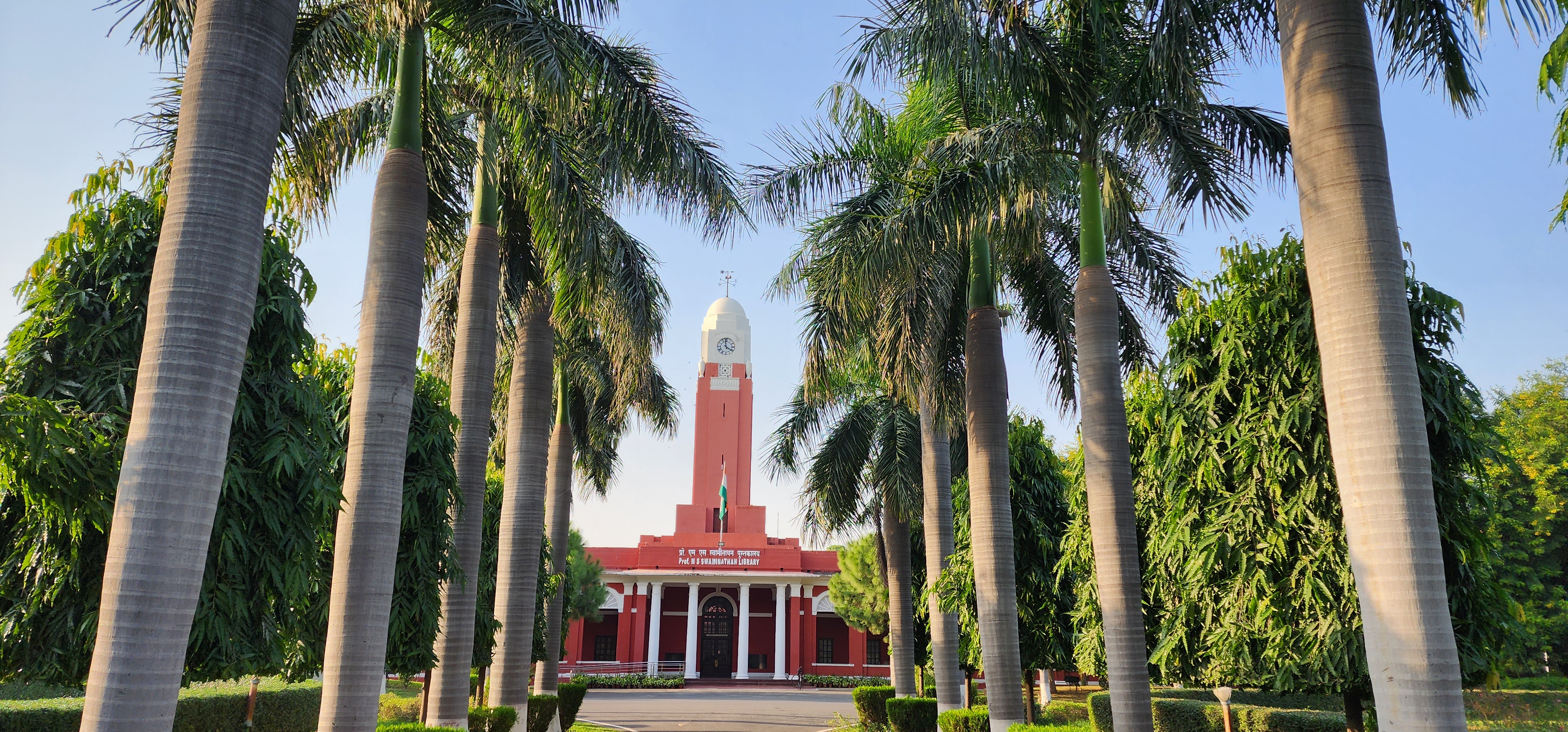
- Library
- Sports
- Laboratories
- Classroom
- Computer Lab
- Grievance Redressal Cell