




 Click it and Unblock the Notifications

-
Cotton University, Guwahati.
Type of College
Established
Affiliation
About Cotton University, Guwahati.
Cotton University is a premier institute of higher learning in Assam. Formerly known as Cotton College, the institute was established in 1901 by Sir Henry Stedman Cotton, the Chief Commissioner of the erstwhile British province of Assam. It became a constituent college of Gauhati University in 1948. The college had been the centre of the freedom movement as well as numerous literary and cultural engagements of the state that cemented Assam’s status as an integral component of India. In 2011 the Cotton College State University was established vide an Act of the Government of Assam, with the college as a constituent. Cotton University came into being in 2017 via The Cotton University Act, 2017 that enabled the unification of Cotton College State University and Cotton College.
HISTORY
As per demands of the public, Manick Chandra Baruah wrote a letter in 1899 to the British government to open a college in Guwahati, as Assam was the only province without a college and Guwahati was most convenient for the people. In response, Sir Henry Stedman Cotton, K.C.S.I., the then Chief Commissioner of Assam, announced on 3 November 1899 that a college would be opened in Guwahati. The name decided by the public, the Cotton College, was inaugurated on 27 May 1901 by Cotton himself. It was affiliated to the Calcutta University.The college was started with five professors, which included Frederick William Sudmersen, the first principal of the college, and 39 students
The college was the centre of the freedom movement and the literary and cultural movements of the state to build the identity of Assam as a distinct integral component of India. As Gauhati University was established in 1948, the college was affiliated to it and became its constituent college.
On 16 October 1992, the college was declared as a center of excellence, an occasion celebrated in a solemn ceremony with Shankar Dayal Sharma, the then President of India.
It officially became a post-graduate college.
Cotton College celebrated its centennial with a year-long program from 27 May 2001 to 26 May 2002. Krishan Kant, the then Vice President of India graced the closing ceremony. India Post issued a ₹ 4.00 commemorative postage stamp on 25 May 2002, as part of the centenary celebration.
Cotton College State University was created via an Act of the Government of Assam (Act XIX of 2011). This act received the assent of the Governor of Assam on 3 September 2011 and Prof. Dhrubajyoti Saikia, who is a Professor at the National Centre for Radio Astrophysics (NCRA) and Tata Institute of Fundamental Research (TIFR) was appointed as the first Vice Chancellor of the University. Later, a bill called The Cotton University Act, 2017 was passed by the Assam Legislative Assembly on 2 March 2017 and by this act, the University and the College were completely merged. Upon enforcement, the University was renamed to Cotton University. By ordinance, the Governor of Assam, Banwarilal Purohit became the Chancellor, who appointed Prof. Bhabesh Chandra Goswami as the Vice Chancellor in July 2017.
VISION
Cotton University aspires towards a holistic education to develop foundational, employable and entrepreneurial skill among its students while contributing knowledge via cutting-edge research and by upholding the highest standards of ethics and accountability in a bid to provide transformative opportunities. We envision ourself as a world-class university backed by excellence in teaching, research, interdisciplinary education, production of new knowledge, leadership and outreach. Our synergistic development of instinct and intellect founded upon human values aligns perfectly with Cotton University’s motto ApramattenaVeddhavyam, interpreted as the philosophy of remaining resilient in the quest of all knowledge through tireless perseverance.
MISSION
It is our persistent endeavour to hone and nurture an egalitarian and inclusive environment for students capable of fostering healthy minds and critical thinking for a strong nation.
The University shall strive to meet the demands of the global world with changing paradigms so as to provide only the best education and build solidarities of knowledge and creativity to make our cosmos vibrant and our students' future-ready.
| Streams | Mode | Duration | Eligibilty |
|---|---|---|---|
| Bachelor of Science in Botany | Full Time | 3 Years | 10+2 |
| Bachelor of Science in Chemistry | Full Time | 3 Years | 10+2 |
| Bachelor of Science in Computer Science | Full Time | 3 Years | 10+2 |
| Bachelor of Science in Environmental Science | Full Time | 3 Years | 10+2 |
| Bachelor of Science in Geography | Full Time | 3 Years | 10+2 |
| Bachelor of Science in Geology | Full Time | 3 Years | 10+2 |
| Bachelor of Science in Mathematics | Full Time | 3 Years | 10+2 |
| Bachelor of Science in Physics | Full Time | 3 Years | 10+2 |
| Bachelor of Science in Plant Biology & Plant Biotechnology | Full Time | 3 Years | 10+2 |
| Bachelor of Science in Statistics | Full Time | 3 Years | 10+2 |
| Bachelor of Science in Zoology | Full Time | 3 Years | 10+2 |
| Streams | Mode | Duration | Eligibilty |
|---|---|---|---|
| Bachelor Of Arts in Anthropology | Full Time | 3 Years | |
| Bachelor of Arts in Arabic | Full Time | 3 Years | 10+2 |
| Bachelor of Arts in Assamese | Full Time | 3 Years | 10+2 |
| Bachelor of Arts in Bengali | Full Time | 3 Years | 10+2 |
| Bachelor of Arts in Bodo | Full Time | 3 Years | 10+2 |
| Bachelor Of Arts in Economics | Correspondence | 3 Years | |
| Bachelor of Arts in Education | Full Time | 3 Years | 10+2 |
| Bachelor of Arts in English | Full Time | 3 Years | 10+2 |
| Bachelor of Arts in Hindi | Full Time | 3 Years | 10+2 |
| Bachelor of Arts in History | Full Time | 3 Years | 10+2 |
| Bachelor of Arts in Journalism & Mass Communications | Full Time | 3 Years | 10+2 |
| Bachelor Of Arts In Law | Full Time | 4 Years | 10+2 |
| Bachelor of Arts in Media Studies | Full Time | 3 Years | XII |
| Bachelor of Arts in Philosophy | Full Time | 3 Years | 10+2 |
| Bachelor of Arts in Political Science | Full Time | 3 Years | 10+2 |
| Bachelor of Arts in Psychology | Full Time | 3 Years | 10+2 |
| Bachelor of Arts in Sanskrit | Full Time | 3 Years | Â 10+2 |
| Bachelor of Arts in Sociology | Full Time | 3 Years | 10+2 |
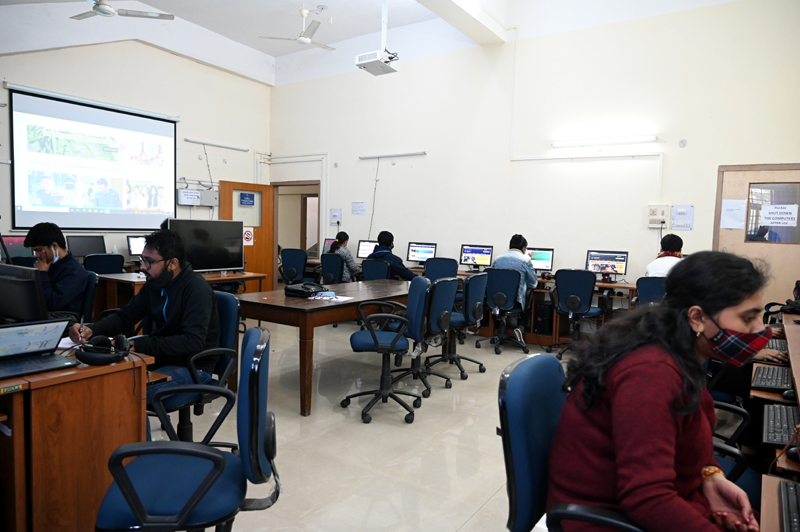
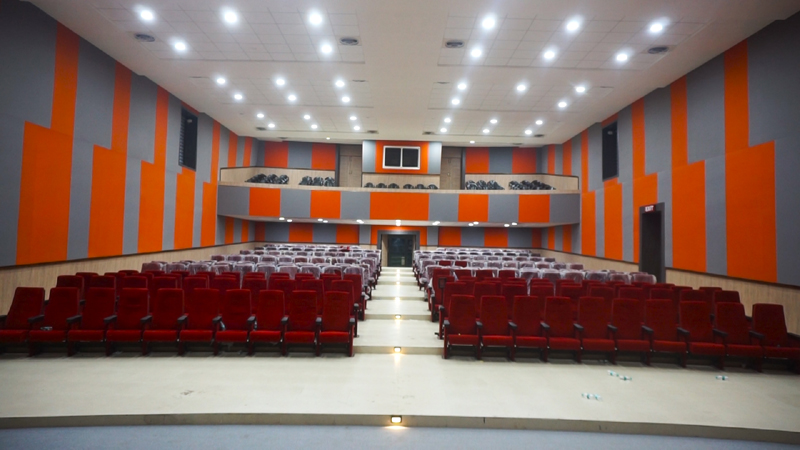
- Library
- Sports
- Hostel
- Laboratories
- Auditorium
- Classroom
- Placement
- Health Centre / Hospital
- Museum
- Playground
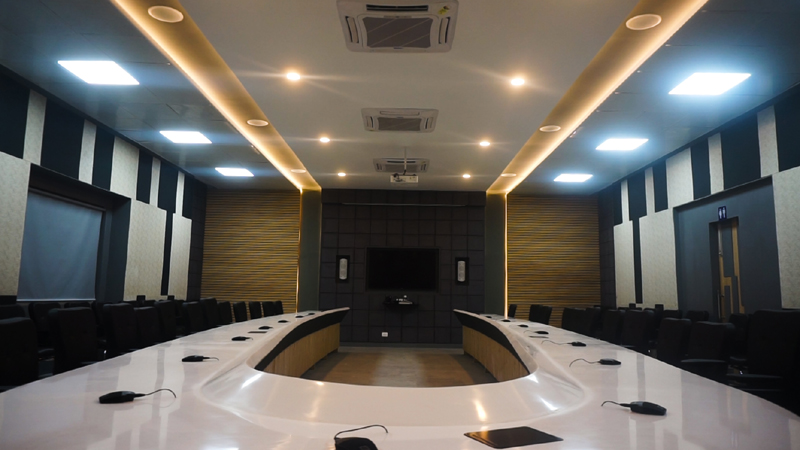
- Conference Hall
- Computer Lab
- Cafeteria/Canteen
- Anti Ragging
- Grievance Redressal Cell