




 Click it and Unblock the Notifications

-
Central University of Punjab (CUPB)
Type of College
Established
Affiliation
About Central University of Punjab (CUPB)
Central University of Punjab (CUPB), Bathinda was established in 2009.
The Central University of Punjab, has been established in 2009 along with other new Central Universities by an Act of Parliament (No 25, of 2009). Central University has completed a remarkable journey of 13 years. University is accredited ‘A+’ grade in 2023 in second accreditation cycle by NAAC and has secured 95th, 87th and 84th, 81st rank in the year 2019, 2020, 2021 and 2022 respectively in the University category of NIRF. It is credited with highest per capita research funding. The university has a mission of providing a wide range of instructional and research facilities across integrated and cross-disciplines, promote innovation in teaching, learning and research, and cross-pollinate new ideas, new technologies and new world-views. It aims to create an ignited workforce responsive to regional, national and global needs in tune with the requirements of academia, industry and business. The university is resorting to e-governance through Samarth Project. The staff members have been trained in twenty-one administrative modules for reducing the response time and bringing transparency in the decision making process and also to ensure participatory model of governance.
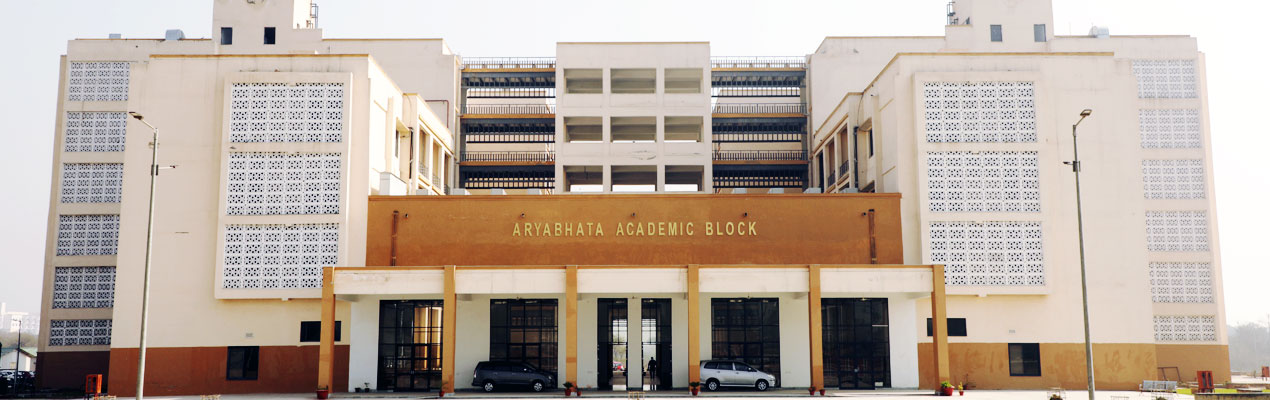
The university started in a three-room Camp Office provided by the state administration in March 2009. Making a modest but speedy start, the university accepted on rent, a dilapidated campus of 37 acres of an abandoned co-operative spinning mill on Mansa Road, Bathinda. University is now expanded in the 500 acre of land in Ghudda village. The campus is environment-friendly and energy-efficient and its Master Plan has provisionally been certified with a five-star rating by GRIHA Council and TERI. It has 31 departments and 11 schools in Sciences, Technology, Education, Humanities, Social Sciences and Law disciplines. It offers PG and Ph.D. programmes in these disciplines. It started with the first batch of 10 students in 4 programmes in August 2009 and currently the University has 1595 masters, 366 doctoral and 21 international students.
CBCS was introduced in 2015, a learning outcome-based curriculum in 2018 and graduate attributes based curriculum will be adopted from the academic session 2021. The curriculum focuses on research, skill development and entrepreneurship.
Besides celebrating international and national commemorative days, students are encouraged to organise and participate in sports and cultural events. The University is committed to the social cause and provides opportunities for students to participate actively in all flagship programmes of Govt. of India and also indigenous sports, Food Carnival and Best out of Waste events. The university campus is a plastic-free campus and the university undertakes environmental promotional activities in the adopted villages to create awareness in the society.
The University has been a forerunner in terms of research projects and publications amongst the newly established Central Universities which is evident from the Faculty to Projects and Faculty to Publications Ratio. The University has implemented an Earn-While-You-Learn scheme for financially weak students since 2015. Despite the locational disadvantage, the University in a true sense is a multi-cultural mini India as it has students from 26 states, faculty from 19 states and non-teaching staff from 12 states. With a much-focussed approach, the university is undoubtedly poised to write a new chapter on the academic horizon of India Mostly, Faculty are trained the most reputed universities/institutes at India and abroad.
VISION
The University envisions to transform the minds to serve the humanity through skills and innovation driven teaching and research; values and community outreach.
MISSION
offer a wide range of instructional and research facilities for inter-, multi- and trans-disciplinary approaches to impart holistic learning;
promote skills and innovation in teaching-learning, evaluation, research and consultancy;
create an ignited workforce responsive to local, regional, national and global needs in tune with the requirements of academics, industry, business and administration; and
address the issues and concerns of the community.
| Streams | Mode | Duration | Eligibilty |
|---|---|---|---|
| Master Of Arts in Comparative Literature | Full Time | ||
| Master Of Arts in South & Central Asian Studies | Full Time |
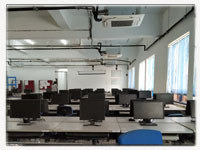
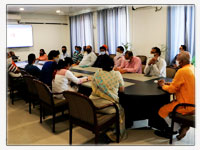
- Library
- Sports
- Hostel
- Laboratories
- Auditorium
- Classroom
- Seminar Halls
- Museum
- Conference Hall
- Medical Facility
- Computer Lab
- Cafeteria/Canteen
- Bus Facility