The National Institute of Mental Health and Neuro-Sciences was popularly known as NIMHANS; is a medical institution located in Bengaluru Urban was established in 1925.
NIMHANS, the apex centre for mental health and neuroscience education in the country, operates autonomously under the Ministry of Health and Family Welfare.
The history of the Institute dates back to 1847 when the Bangalore Lunatic Asylum was founded. In 1925, the Government of Mysore rechristened the asylum as the Mental Hospital. The Mysore Government Mental Hospital became the first institute in India for postgraduate training in psychiatry.
The National Institute of Mental Health and Neurosciences (NIMHANS) was the result of the amalgamation of the erstwhile State Mental Hospital and the All India Institute of Mental Health (AIIMH) established by the Government of India in 1954.
Therefore in 1974, AIIMH and Mental Hospital were amalgamated, giving birth to the National Institute of Mental Health and Neuro-Sciences (NIMHANS). With this, the legacy of Dr. Govindaswamy to implement a multidisciplinary approach by integrating mental health and neurosciences turned into a reality.
The institute was inaugurated on 27 December 1974 as NIMHANS, establishing it as an autonomous body under the Societies Registration Act to lead in the area of medical service and research in the country.
On November 14, 1994, NIMHANS was conferred a deemed university status by the University Grants Commission with academic autonomy. The institute has been declared as an Institute of National Importance (INI) by an act of parliament on 14th September 2012.
In March 2017, the Government of India passed the Mental Healthcare Bill 2016, which also proposes to set up NIMHANS-like institutions across the nation.
As per the Act, NIMHANS does not come under the purview of any of the statutory councils, namely, Medical Council of India, Indian Nursing Council or Rehabilitation Council of India. A number of seats for different courses notified in the prospectus will not be increased under any circumstance.
Institute at a Glance:
The Government of India established the All India Institute of Mental Health in 1954 in association with the then existing Mental Hospital of the Government of Karnataka. The major objective of the Institute was to generate manpower in the field of mental health and neurosciences.
The Mental Hospital, Bengaluru, which had built up certain traditions since 1938 in matters related to undergraduate training in the field of Psychiatry was chosen by the Government of India as the centre for training.
In tune with this objective, two diploma courses – one in Psychological Medicine (DPM) and the other in Medical Psychology (DMP) were started in January 1955. These were followed by a Post Certificate Course in Psychiatric Nursing (DPN) in January 1956. The Institute was then affiliated to the University of Mysore for these courses.
Subsequently, the Institute got affiliated to the Bangalore University, Bengaluru in 1964. The Bangalore University established a separate faculty of Mental Health and Neurosciences.
The institute introduced MD in Psychological Medicine in 1966, Ph.D. in Clinical Psychology in 1967 and a Post Graduate Diploma in Psychiatric Social Work (DPSW) in 1968. DM in Neurology and M.Ch in Neurosurgery courses followed in 1970. Ph.D. programs in different disciplines were introduced later.
The All India Institute of Mental Health and the Mental Hospital of the Government of Karnataka were amalgamated into an autonomous Institute and thus the National Institute of Mental Health and Neuro Sciences (NIMHANS) came into existence in 1974. With this, academic training programs got a fillip and many new courses were introduced.
Milestones:
1847 - Bangalore Lunatic Asylum was founded. Dr. Charles Irwing Smith, a British medical practitioner in Bangalore, played a pivotal role in the establishment of the asylum
1925 - The Bangalore asylum was renamed the Mysore Government Mental Hospital, an important step towards developing a medical approach to mental illness
1935 - Insulin Coma Therapy (ICT), developed by Austrian-American psychiatrist Manfred J Sakel, was introduced in the Mysore Government Mental Hospital by Dr. MV Govindaswamy, the then medical superintendent of the Mysore Government Mental Hospital, as in the UK (1935) and the US (1936)
1936 - The second highest hillock in Bangalore was allotted for the Hospital, which was earlier housed in a building on Avenue Road, where the State Bank of Mysore head office stands today. Maharaja of Mysore, KrishnarajaWodeyar laid the foundation stone for constructing the hospital in May 1936.
1940 - A well-equipped laboratory and medical library were started. The Hospital was recognized as a teaching institution for MBBS, BA Hons. in Psychology, and LMP
1942 - The first leucotomy operation in the country was performed on 21st September 1942 by Dr. M.V. Govindaswamy and Dr. BN Balakrishna Rao at the Hospital
1945 - Following the recommendations of the Mental Health Advisory Committee of the Indian Council for Medical Hygiene under Sir AL Mudaliar in 1945 and Bhore Committee in 1946, the Government of India sanctioned the establishment of the All India Institute of Mental Health on 1st April 1954. On 6th August 1954, Rajkumari Amrit Kaur, the then Union Health Minister inaugurated the AIIMH and Dr. MV Govindaswamy was appointed as the Director on 15th September 1954
1955 - The first postgraduate courses, Diploma in Psychological Medicine (DPM) and Diploma in Medical psychology (DMP) were started
1961 - Children’s Pavilion comprising a child guidance clinic and a children’s ward was opened
1966 - New post graduate courses in psychiatry (MD psychological Medicine), Neurology (DM Neurology), Neurosurgery (MCh Neurosurgery) and Post Graduate Diploma in Psychiatric Social Work (DPSW) in affiliation with Bangalore University. Five special clinics: Anxiety Clinic, Behaviour Disorder Clinic, Headache Clinic, Hysteria Clinic and Mental Deficiency Clinic started functioning from the same year
1971 - Occupational Therapy and Rehabilitation Centre with different sections was inaugurated
1973 - The Neuro Centre, with a separate blood bank and a well-equipped Neuroradiology section was inaugurated
1974 - The Mental Hospital established by the Government of Mysore and the All India Institute of Mental Health established by the Government of India were amalgamated on 27th December 1974, resulting in the formation of the National Institute of Mental Health and Neuro Sciences (NIMHANS). Community Psychiatry Unit was also launched in the same year
1975 - Neuropathology Museum storing human brain specimens for academic and research purposes was inaugurated. Community mental health services were launched at Sakalwara. A unique facility of family wards was also opened
1979 - The Central Animal Research Facility (CARF) was started as an aid to research and teaching
1982 - Electron Microscopy Lab in the Neuropathology Department was established
1994 - Recognising its eminent academic position, NIMHANS was declared a Deemed University, with academic autonomy
1995 - The Human Brain Bank was established with financial aid from the Department of Science and Technology (DST), Department of Biotechnology (DBT), and Indian Council for Medical Research (ICMR)
2002 - Advanced Centre for Ayurveda to augment clinical service and research activity was started
2007 - The Neurobiology Research Centre (NRC), a sophisticated common research facility, was opened
2011 - Inventa, a critical care ventilator, was developed by NIMHANS
2011 - The NIMHANS Centre for Well-Being at BTM Layout was started, with an aim to provide promotive and preventive services in the area of mental health
2012 - NIMHANS was declared an Institute of National Importance, vide the Gazette of India Notification dated 14th September 2012 by the Government of India. Centre for Public Health (CPH) was established to provide inputs for strengthening public health components in formulating policies and program development focusing on problems, priorities, challenges, and solutions, in the same year
2014 - ICMR Advanced Centre for Translational Research was started
Vision:
To be a realm leader in the area of Mental Health and Neurosciences and evolve state-of-the-art approaches to patient care through translational research
Mission:
Test Establish the highest standards of evidence-based care for psychiatric and neurological disorders and rehabilitation
Develop expertise and set standards of care for diseases of public health relevance in the developing world
Work with the government and provide consultancy services for policy planning and monitoring strategies in the field of Mental Health and Neurosciences and facilitate execution of national health program
Human resource capacity building by training in diverse fields related to Mental Health and Neurosciences
Develop and strengthen interdisciplinary, inter-institutional and international collaboration with universities and research institutes across the globe to foster scientific research, training in advanced technology and exchange of ideas in the areas of Mental Health and Neurosciences
Strive to enhance equitable accessibility of primary care in Mental Health and Neurological Disorders to all sections of society and ages including the vulnerable population
Evolve and monitor the strategies for disaster management and psycho-social rehabilitation in different cultural and ethnic groups
Promote Mental Health literacy and eliminate the stigma attached to the Mental and Neurological Illnesses by taking the measures and the delivery system to the centres of primary health care honoring the human rights and dignity
Integrate allopathic and oriental medicine into health care delivery and promote evidence-based research
Integrate physical and metaphysical aspects of Neuroscience research to promote yoga and its application to positive mental health
Participate in broad field of Neuroscience and Behavioral Research applicable to human ethics, organ transplantation, stem cell research, space science, and nuclear science
Type of College
Government
Established
1925
Affiliation
National Institute of Mental Health and Neuro-Sciences
The Institute has a vibrant campus life with an applied range of opportunities to fill your free time
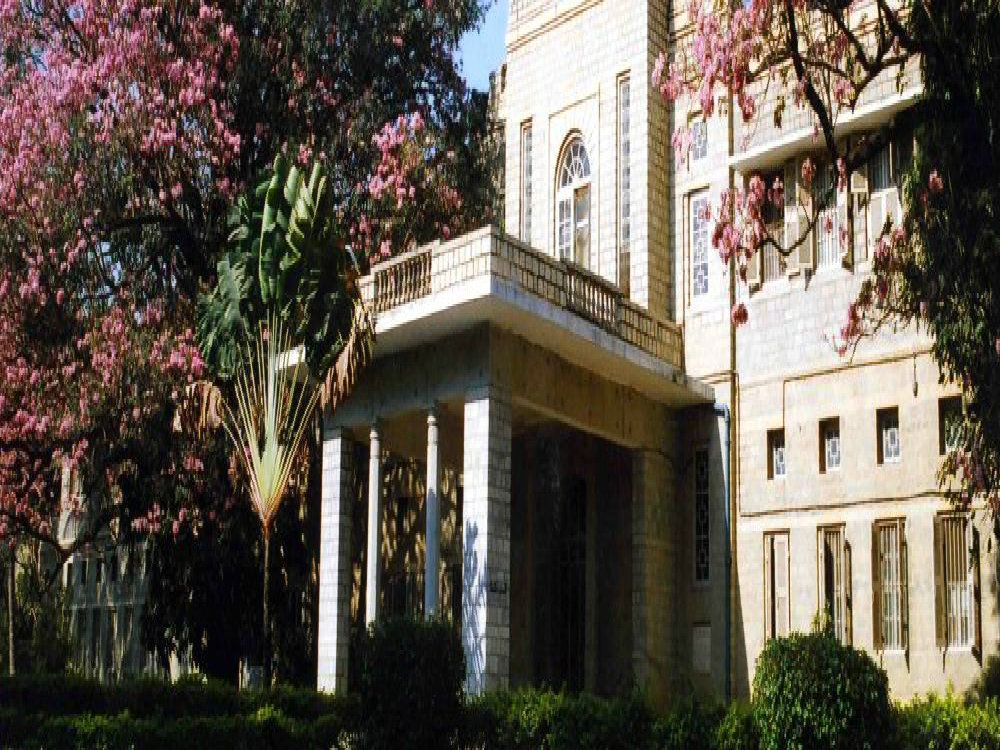
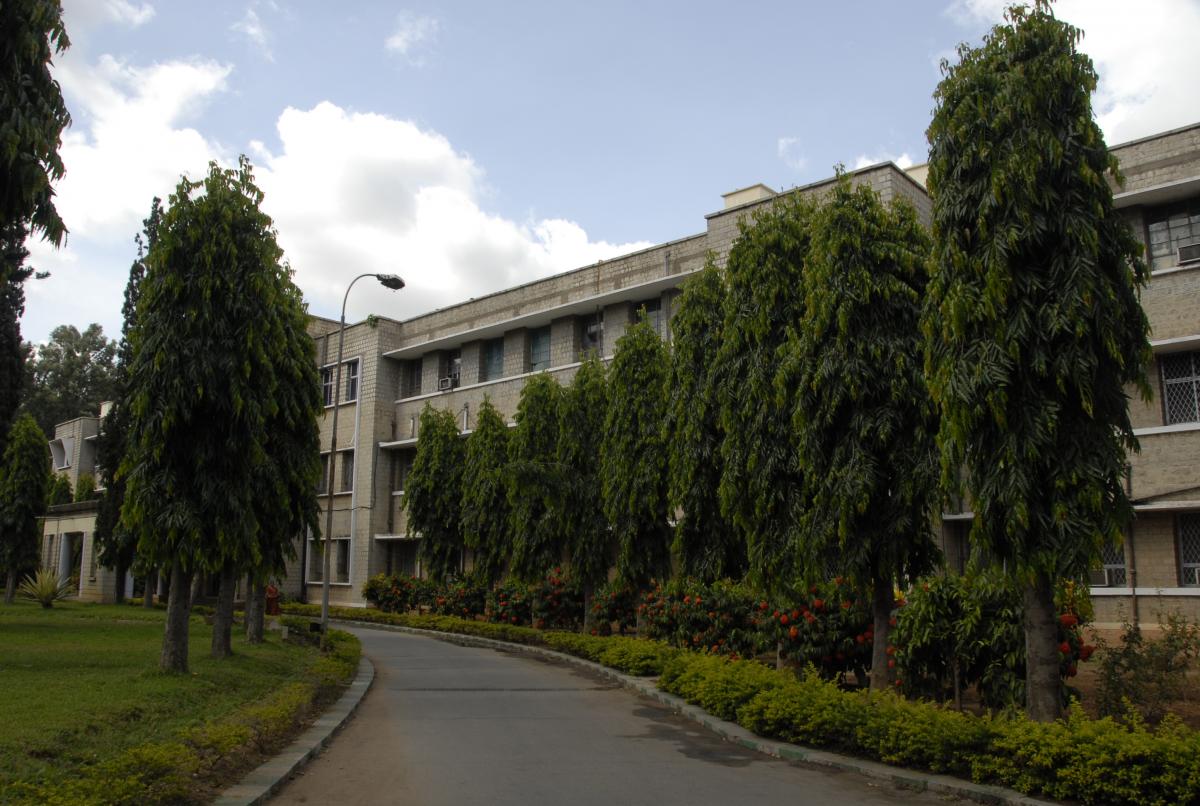
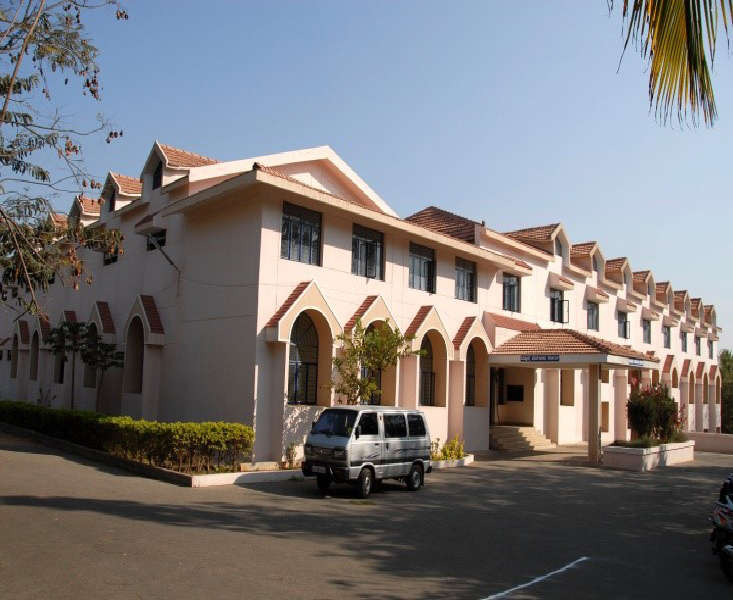
The Institute has an impressive and pollution-free campus with panoramic green surroundings, elegant landscaping, and beautiful flower-beds
The Institute has separate individual departments for all subjects with young, dynamic faculty and non-teaching staff and with good results
The Institute has the most eminent Faculty members and they are really well qualified, experienced and truly committed towards enhancement and development of the students
The Institute has well-equipped with modern facilities like library, laboratory, classrooms, computer lab, canteen, seminar halls, common rooms, auditorium, multipurpose halls, health centre, playground & hostel etc.
A sufficient number of classrooms with varying sizes are made available for the smooth conduct of different classes in the college
The Institute has a library with a good number of books (both text and reference) on various subjects to meet the needs of the students as well as the teachers with reading room facility. Daily Newspapers and selected journals are also regularly subscribed
State of the Art Laboratories with sufficient space and all the necessary equipment are made available to various departments
NIMHANS is synonymous with providing high standards of clinical care, quality training, and cutting-edge research in the frontier areas. Combined priorities for comprehensive patient care, manpower development, and research stem from the commitment to an integrated and multidisciplinary approach which addresses societal needs
The advances in genomics, computational neuroscience, mathematical modeling, neuroimaging, molecular biology and a host of new disciplines including public health, are being translated to help humanity in need and promote the growth of knowledge
The Institute runs a canteen inside the campus where staff and students can have meals and snacks prepared in a hygienic manner and at an affordable cost
Internet & Wi-Fi facilities may be availed by the students and teachers as per their needs
The Institute has easy access to every kind of public transport. Campus has its own bus facility
The Institute also has a hostel with providing all the facilities, security and good atmosphere, best suited for studies of the boys & girls coming from far-off places
The Institute has a large playground with well-equipment for different sports like Cricket, Football, Volleyball, Hockey, Badminton and so on
Fully fledged bank branches are on the campus. Apart from bank branches, ATMs are available
A hospital is available on the campus for routine check up for Inpatient Services, Outpatient Services, Casualty and Emergency Services
The campus has shopping centers comprising various kinds of shops like medical, general stores, laundry, café house, food parlors, fruit and Juice centers, etc.
State Government and Central Government offers a number of scholarships to the meritorious students and the students belonging to SC / ST / OBC
A special complaint cell (Sexual Harassment Cell) has been formed for the female students in the college. Students can directly complain orally or by written application to the head of the cell. Apart from this, Ragging is strictly prohibited on the college campus
The institution has provided ICT facilities like computers, projectors, audio-visual gadgets, scanners and printers to the departments and also other aids and a huge number of availability of books for effective delivery of curriculum and for inculcating the knowledge of the subject
To sharpen the skill of students and their personality development, various curricular and extra-curricular activities are the regular features of the institution
The Institute also organizes workshops, seminars, and conferences for improving teaching skills and methodology
The Institute consists Women Cell to help female students. This cell helps and guides girls to sort out from their personal problem and avoid them from any harassment
Featured Facilities:
MEG: Elekta- Neuromag TRIUX 306 sensor probe unit is equipped with 102 triple (2 (x,y) planar gradiometers and 1 magnetometer (z)) sensor elements which are evenly distributed over the surface of the helmet that housed inside the liquid helium bath. The functional activity of the brain is sampled independently at 306 configured channels. MEG is completely safe, non-invasive and provides reliable source localization which aiding in placement of intracranial electrodes.
Simultaneous EEG acquisition with 32, 64 and 128 channels EEG cap which is compatible with MEG. High-density EEG measurement simultaneously with MEG offers various features such as comparison of the source localization obtained from EEG and MEG, recording the electric and magnetic activities of the brain, capturing the activity which may sometimes selectively sensitive to either of the techniques, etc.
Simultaneous EEG acquisition with standard 10-20 EEG (using golden plated electrodes) system
Accessories for evoked stimulus studies (auditory, visual, somatosensory and motor task). These can be used for performing cognitive studies and for the pre-surgical evaluation.
Sophisticated versatile software: DANA, CURRY, and BESA. The software offers the scope for visualizing and processing of data, 3D mapping of head/brain, source localization and co-registration with MRI, CT, PET, etc.
Oxygen level monitor for monitoring the level of oxygen inside the magnetically shielded room (MSR) for the patient care to safeguard in case of suffocation.
Two video monitoring units equipped with two Infrared (IR) cameras, viewing in two different angles, fixed inside MSR allows the Operator/Technician to monitor the patient/subject movement and comfortable. The bidirectional communication system for the communication between patient/subject inside MSR and Operator/Technician outside MSR.
Reclining chair and bed respectively used for recording MEG in sitting and supine position. Also, pediatric chair for recording pediatric MEG
NIMHANS Gymkhana is a facility created for the social and physical well-being of the NIMHANS family viz., Staff, Students and their children. The administration of gymkhana rests with Director/Vice-Chancellor, NIMHANS as its President, and Registrar, NIMHANS as its Vice-President.
NIMHANS has been successful in implementing several technological innovations, on par with the advances elsewhere in the world. The Institute continues to be the largest training centre for mental health and neuroscience professionals in the country. It is actively committed to imparting advanced technical knowledge to medical, para-medical and nursing professionals to promote skills and evolve employable manpower to meet the needs of the nation.
Spread across 135 verdant acres in the heart of the garden city, NIMHANS offers the latest medical advances in an environment that promote mental health and enhances a sense of wellness. The state-of-the-art facilities bolstered by highly skilled professionals and technicians—who are dedicated to providing patients with compassionate and comprehensive care—make NIMHANS a centre of excellence and specialized expertise.
Science
Streams
Mode
Duration
Eligibility
Bachelor of Science in Human Genetics (Honours School)
Full Time
3 Years
10+2
Bachelor of Science in Neurophysiology Technology
Full Time
3 Years
10+2
Bachelor of Science in Nursing
Full Time
3-4 Years
10+2
Engineering
Streams
Mode
Duration
Eligibility
Bachelor of Engineering in Biomedical
Full Time
4 Years
10+2
Disclaimer:
All the information (including colleges, universities, their respective courses,
colleges Wikipedia etc.) on Careerindia.com has been compiled from the respective
websites, newspaper and other reliable sources available in the public domain. While
every care has been taken to present the information in most comprehensive, accurate
and updated form during compilation, yet Careerindia.com doesn\'t take any kind of
responsibility regarding the content. Information provided, may become obsolete
partially or completely due to time lapse, unedited, incomplete or incorrect
altogether, even after sincere efforts of updating at regular intervals to ensure
high quality.
As the content in the site is only for reference purposes, the users are advised to
refer respective original websites in case there is any kind of doubt and if
possible inform us to do the necessary changes to make Careerindia.com a
considerably useful site for visitors.
However, if you have found any inappropriate or wrong information/data on the site,
inform us by mailing us at [email protected] for
rectification/deletion/updating of the same.
Notifications
Settings
Clear Notifications
No New Notifications
Notifications
Use the toggle to switch on notifications
Block for 8 hours
Block for 12 hours
Block for 24 hours
Don't block
To start receiving timely alerts, as shown below click on the Green “lock” icon next to the address bar
Click it and Unblock the Notifications
Close X
Close X
To Start receiving timely alerts please follow the below steps:
Click on the Menu icon of the browser, it opens up a list of options.
Click on the “Options ”, it opens up the settings page,
Here click on the “Privacy & Security” options listed on the left hand side of the page.
Scroll down the page to the “Permission” section .
Here click on the “Settings” tab of the Notification option.
A pop up will open with all listed sites, select the option “ALLOW“, for the respective site under the status head to allow the notification.
Once the changes is done, click on the “Save Changes” option to save the changes.



 Click it and Unblock the Notifications








 Continue with Google